If you have dived in Bonaire before, please share your experiences: Dive spots you would recommend, which Dive Center you used, Fishes & Diving, Visibility, Currents, etc. Please post your comments in the section below, by doing so you will help fellow divers to plan their next trip

Bonaire is a shore-diving holiday with unusually generous freedom: a rental pickup, a buddy and a row of yellow site markers can shape the day, while boat dives open up Klein Bonaire. The pleasure is in slowing down on a familiar reef, then returning to see what changed.

Bonaire is a land-based diving destination. Most divers find that the best way to dive is to mix a few boat dives with shore diving. Independent entries suit divers comfortable with navigation, buoyancy and judging the exit; a guided first day makes the island much easier to understand.
Planning information checked 17 November 2026.
In this page you will find more detailed information about scuba diving in Bonaire.
Table of contents
Best Dive Review
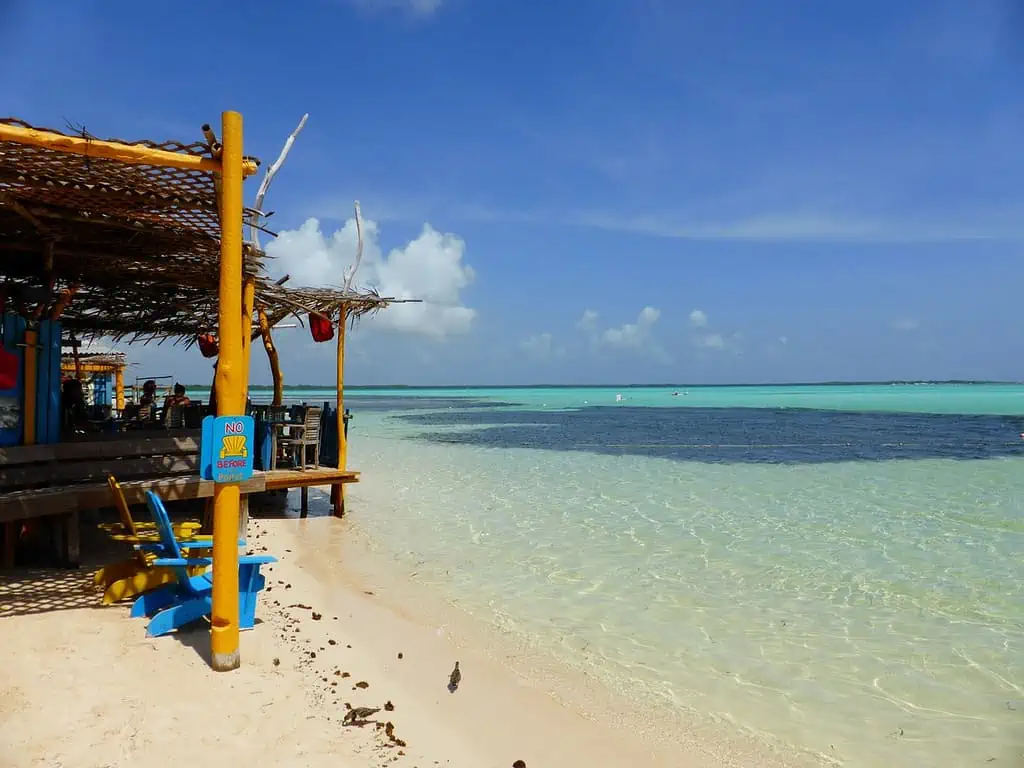
Shore dive sites are clearly marked. Along the road, large rocks painted yellow carry the site name. The marker gets you to the shore; the briefing explains the entry, exit and reef route. Those are different jobs, particularly when swell changes the shoreline.
A memorable trio is 1000 Steps for its stairway and sloping reef, Karpata for its sculpted reef ridges, and Hilma Hooker for a wreck-shaped change of scene. The steps at 1000 Steps are fewer than the name suggests, but can certainly feel longer on the way back up with a cylinder!
Three contrasting Bonaire dive sites
Markers use the published PADI site reference positions. They are for trip planning, not entry instructions, underwater navigation or proof that a site is open today.
1000 Steps
A staircase leads to a beach entry; the climb back matters when choosing how much equipment to carry. Site reference and location
Karpata
Reef ridges and sand channels; the adjoining northern marine reserve is closed to diving. Site reference and location
Hilma Hooker
A wreck on the southern reef system, best planned with suitable depth experience; an exterior tour is rewarding without entering the hull. Site reference and location
Marine-park rules and current access
The 2026 STINAPA Nature Fee is US$40 per eligible person, valid through 31 December 2026, not for twelve months from purchase. Children under 13 and specified resident groups are exempt. It is separate from Bonaire’s visitor entry tax.
STINAPA requires an orientation and buoyancy check before diving. The named marine reserves are closed to diving, and local restrictions can change. STINAPA currently lists Washington Slagbaai National Park as closed for diving, although land visits remain possible.
Stony Coral Tissue Loss Disease has affected Bonaire. The marine park’s current guidance explains equipment decontamination and access updates. The dive centre’s current briefing is the right place to confirm closures and an equipment-compatible cleaning procedure.
How to dive Bonaire?
Shore freedom or a boat schedule?
Shore diving
A pickup and tank package suit buddies who enjoy choosing their own pace. Entry difficulty and the walk back deserve as much attention as the underwater attractions.
Guided diving
Useful on arrival, after a long break, or when a site is unfamiliar. It also leaves more attention for finding the small creatures that camouflage so well.
Klein Bonaire by boat
Boat trips add reefs around the neighbouring island without carrying equipment over a beach. The operator chooses sites for the day’s conditions.
Tank-access hours, unguided-diving rules, rental insurance and boat reservations differ between centres. A package described as unlimited shore diving does not automatically include boat seats, a guide or equipment rental.
For a price reference, Buddy Dive publishes shore and boat packages. The Travel guide below sets out one dated seven-night example, its occupancy basis and the separate visitor fees.

Best time to dive in Bonaire
Diving is year round in Bonaire. A reef-focused trip can work in any season, but weather and sea state still affect individual sites. Warm water does not mean every shoreline is an easy entry, and a location south of the main hurricane tracks is not immunity from swell or storms.
The more useful planning choice is often between a busy winter holiday and a quieter date with a better room-and-car quote. A flexible daily site plan is more valuable than a promise of identical visibility all year. PADI’s Bonaire overview describes the year-round diving setting; current local forecasts and briefings take precedence over seasonal averages.

Top liveaboards in Bonaire according to divers reviews
Dive courses
Bonaire’s shore-based operation gives students time to practise buoyancy, navigation and entries without turning every lesson into a long boat trip. A sheltered training site and a suitable instructor matter more than a destination-wide “beginner friendly” label.
For certified divers, a refresher before independent shore diving can make the rest of the week more relaxed. Night-diving or enriched-air training may also be useful; nitrox availability is not permission to exceed the analysed gas’s depth limit. Course schedules, equipment and certification fees belong in the written quote.
Scuba Diving conditions
| Planning question | What changes the answer? |
|---|---|
| Temperature | Warm tropical water; exposure protection still depends on depth, season and repeated dives. A recent reading from the operator is more useful than the old mixed-island temperature graph. |
| Visibility | Often a draw, but swell, suspended sand and the site can change it. Clear-water photographs are not a daily forecast. |
| Current and surge | Shore sites are not uniformly sheltered. The east coast requires particular care and experienced local guidance. |
| Depth | Sloping reefs offer several depth choices; a deep reef or wreck profile requires suitable training, gas planning and recent experience. |
A sensible first dive is one with a straightforward, clearly identified exit. For a group with different experience levels, the least experienced buddy and the actual conditions set the plan. STINAPA’s diving rules distinguish the additional demands of the east coast.
Snorkelling in Bonaire
A snorkeller and a diver may enjoy the same coastline without using the same route. Shallow reef, an easy exit, boat traffic and the day’s wind matter; a famous deep dive is not automatically a good snorkelling stop.
Travelling with a non-diver?
A land-based stay makes mixed holidays straightforward: one person can dive while the other keeps a beach, town or island-activity programme. Buddy Dive explicitly offers activity and snorkel packages for non-divers. A customised price and the inclusion of each outing need confirmation; the published diver package is not a verified non-diver fare.
A non-diver package also does not establish permission to accompany every scuba boat. Boarding, supervision, equipment and any boat surcharge need confirmation for the actual trip. A shore snorkel and a guided boat snorkel are different products.
Fishes and Coral
Meet six reef favourites
Barracudas
A long silver silhouette and a prominent jaw make barracudas recognisable before the finer markings come into view.
Tarpon
Large reflective scales and a deep, upturned mouth stand out around wrecks and reef edges.
Frogfish
Camouflage is the attraction: a seemingly ordinary lump beside a sponge can turn into the most satisfying sighting of the dive.
Moray eels
An eel’s head in a crevice is a reason to slow down and watch from a respectful distance, without reaching into the reef.
Pufferfish and porcupinefish
Rounded bodies and deliberate fin movements contrast with the fast reef swimmers. The illustration represents a porcupinefish.
Wrasses
Busy reef fish worth watching during a slow shallow dive; the illustration represents a bluehead wrasse.
Representative illustrations created for Divezone, not sighting records. Fish groups are supported by the PADI 1000 Steps and Hilma Hooker site accounts linked above; encounters are never guaranteed.
Turtles add another reason to linger, but they are not fish and are not counted in these six cards. Corals and sponges provide much of the scenery and shelter. Bonaire’s protected status does not remove the pressures of coral disease, warming or physical damage: careful buoyancy and clear space around animals remain part of every dive.

Diving Safety
If you are planning an upcoming dive trip or travelling to Bonaire, it is a really good idea to invest in travel insurance for scuba diving, because you never know what could happen and when you might need it (because accidents do happen!). I recommend this diving insurance as they offer worldwide coverage and focus on providing scuba divers a quality insurance and medical assistance service.
Bonaire rewards the diver who likes a little independence and plenty of reef time. A few guided or boat dives can give the week variety; returning to a familiar shore site gives it a rhythm of its own.
Bonaire questions, answered
Do I need a boat to dive Bonaire?
Many sites are accessible from shore. Boat trips remain useful for Klein Bonaire and for divers who prefer an organised outing.
Does the Nature Fee include the visitor entry tax?
No. The STINAPA Nature Fee and the government visitor entry tax are separate charges with different exemptions. The Travel guide explains both.
Can a beginner join an independent shore dive?
An introductory dive requires professional supervision. Newly certified divers should discuss the entry, conditions and a guided option with the centre before choosing independent diving.
Are all dive sites open?
No. Marine reserves are closed to diving and temporary restrictions also apply. STINAPA’s current notice and the local briefing determine the available sites.
Photos Bonaire
Travel Guide
Now that you know all about the underwater world, you might want to start planning your scuba holiday! Check out our Bonaire Travel Review for information about how to get there, activities and excursions, where to stay, and more.

This island is made for Divers! Resorts are built to dive, double reef system makes superior diving for both beginners and advanced, and shore diving is the easiest in the world for self guided exploration. Snorkeling too is awesome and easy. This is a protected Marine Wildlife Sanctuary so the reef and wildlife are abundant.
Hi Amanda! Indeed, Bonaire is a whole lot of fun for divers and snorkelers! Thank you for sharing this review on Divezone!
Best bubbles, always!
Taking my 5th trip to Bonaire this week. Our group of 12 rented a Villa (as before) and we will eat out a couple nights and then take turns with some cooking! Combine 3, 2 tank boat dives and unlimited shore diving. We have always had a great time. The villa’s have plenty of storage and wash downs for equipment. This is the way to go. You can’t beat Bonaire! Awesome diving and awesome people.
We have stayed on Bonaire to dive several times, and it has always been wonderful. Excellent visibility, some of the healthiest, most beautiful reef systems we have ever seen. Most sites are shore dives with a short swim out, but do bring your booties, as the shoreline can be rocky. No need to pay a guide after a couple of introductory dives, as you can easily rent a truck, load up tanks from a dive shop, and explore on your own (easy out and back with light current most places). LOTS to see in 20-90ft depth. Don’t miss Bonaire!
I’m replying to myself because the site did not let me give an actual rating. I would definitely give Bonaire 5 Stars!
Hello Melissa! Thank you so much for reading Divezone, and taking the time to drop this detailed review here! It will definitely be useful for our readers coming around looking for information while planning their trip to Bonaire!
I’m super happy to read that you’ve had a great experience on Bonaire. Indeed, it’s one of the best islands there is to discover independently.
As for the star review, the one at the top of the page is working on my end, you just have to click at the end of the fifth star and it should register your vote! Hope this helps!
Safe bubbles, always!