 Destinations
If you have dived in Australia before, please share your experiences: Dive spots you would recommend, which Dive Center you used, Fishes & Diving, Visibility, Currents, etc. Please post your comments in the section below, by doing so you will help fellow divers to plan their next trip

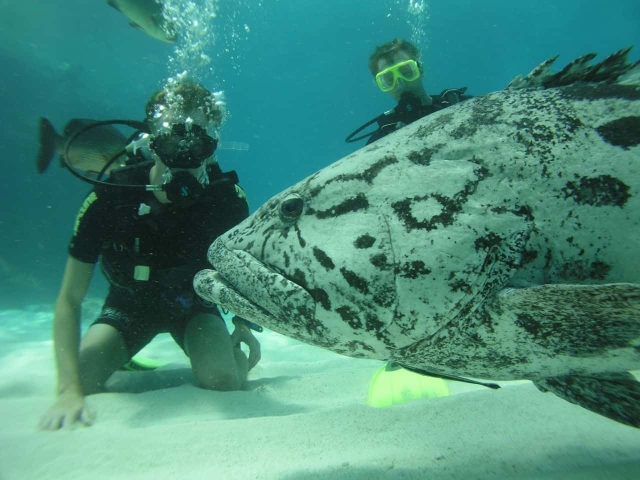
Australia offers some of the best diving in the world, famous primarily for the amazing Great Barrier Reef in Queensland. This is THE biggest Reef on Earth which stretches over 2000km! It is home to a whole array of amazing biodiversity and here you can spot various species of Sharks, Sea Turtles, Giant Groupers, Whales and Dolphins.
As the Great Barrier Reef is so huge, there are endless places to discover. The most popular is the beautiful city of Cairns where most of the liveaboard trips to the Great Barrier Reef start from.

Photo: ciamabue.
Port Douglas, a bit further North, is another great gateway to the Reef with its upmarket accommodation and resorts if that takes your fancy.
You can also start further South in Townsville, famous for one of the best dive sites in the World, the Yongala Wreck! Another option is to explore the Whitsunday Islands and take a liveaboard tour to the Great Barrier Reef.
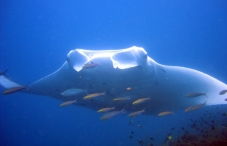
A less famous but very good diving destination is the Ningaloo Reef on the Australian West Coast where you can swim with Whale Sharks and Manta Rays! The main gateway to this hidden gem is the town of Exmouth. There is a famous dive site in Exmouth called the Navy Pier, known for its biodiversity but currently closed for maintenance (checked 13 October 2026).
Australia has options for new and experienced divers, but not every reef, wreck or offshore expedition suits the same level. The southern coast adds a different kind of adventure: temperate-water habitats, unusual small marine life and rewarding shore dives.
In this page you will find more detailed information about scuba diving in Australia.
Table of contents
Best Dive Review
Site access update — 13 October 2026: Navy Pier, HMAS Brisbane and HMAS Adelaide are currently closed. Their individual guides link to the operator or authority notices. Do not treat older photographs, videos or reader comments as confirmation of access.
Where to dive?
The best and main scuba diving destinations in Australia are:
The Best dive sites of Australia are:
- North Horn
- Cod Hole
- The Yongala Wreck
- Navy Pier in Exmouth — currently closed for maintenance.
Macro diving and the southern coast
Australia is not only about big fish. Sydney’s temperate reefs and southern jetty dives reward a slower look, with seadragons, seahorses and other small animals among the attractions. Exmouth’s Navy Pier is another very different underwater setting from an open coral reef, but is currently closed for maintenance. There is no need to choose between wide-angle scenery and watching a tiny creature get on with its day.
Tourism Australia’s diving overview and Sydney diving locations.
Wreck diving
Australia has some of the best Wreck Diving in the World! There are many wrecks worth exploring throughout the country. The Yongala Wreck offers quite possibly some of the best diving in Australia! Moreover, the Australian Navy have scuttled its former battle ships to create artificial reef and diveable Wrecks! The most famous ones are:
- HMAS Brisbane — public access currently closed; check the official park notice.
- HMAS Swan
- HMAS Perth
- HMAS Adelaide — closed following structural damage; do not plan a dive here.
How to dive Australia?
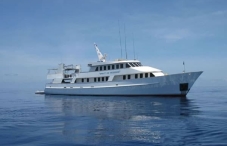
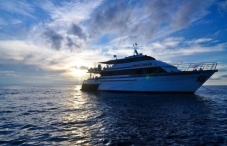
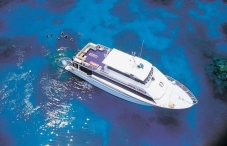
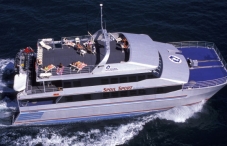
Choose your region first, then your boat. A short Cairns liveaboard, a Coral Sea expedition and a Ningaloo wildlife holiday are three very different trips. Australia is big enough that trying to squeeze them all into one week is better exercise for your suitcase than for your fins.
Day boats, reef stays or longer expeditions?
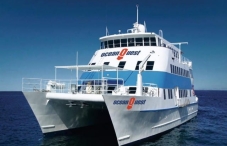
- Cairns outer reefs: day trips work well when time is short; overnight boats add evenings aboard and early dives. Pro Dive Cairns offers a three-day, two-night programme on the Scubapro fleet. OceanQuest offers stays of one to five nights, reached by transfer boat.
- Ribbon Reefs and Coral Sea: choose the actual itinerary when Cod Hole or Osprey Reef is your priority. These are not standard stops on every Cairns cruise. Weather and the selected departure determine which sites are reached.
- Townsville and the Yongala: a dedicated wreck excursion is a different proposition from a coral-reef training trip.
- Ningaloo: a land base in Exmouth or Coral Bay lets you combine reef outings and seasonal wildlife tours. Whale-shark swimming is normally a snorkelling experience, not a scuba dive.
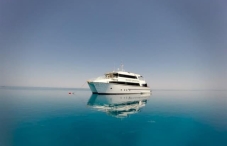
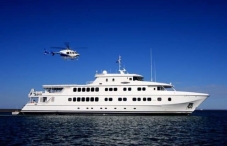
For starting points, explore our Scubapro review, OceanQuest review and Spirit of Freedom review. Their routes serve different holiday plans.
Explore Australia liveaboard dates and prices. Divezone may earn a commission if you book through this link.
Programme references checked 9 October 2026: Pro Dive Cairns and Divers Den.
Australian liveaboard itineraries and dive sites
Australia itinerary map
Choose routes independently or overlay several. Numbered regional/site references show the order; straight connections are indicative, not navigational tracks. Weather, permits and the booked departure determine actual stops.
- Cairns outer reefs · Scubapro example: Cairns Marlin Marina → Flynn Reef → Milln Reef → Thetford Reef → Cairns Marlin Marina.
- Ribbon Reefs · 3 nights: Cairns waterfront → Steve’s Bommie → Lighthouse Bommie → Cod Hole → Lizard Island.
- Coral Sea · 4 nights: Lizard Island → Cod Hole → Osprey Reef / North Horn → Steve’s Bommie → Cairns waterfront.
- Ribbons & Coral Sea · 7 nights: Cairns waterfront → Steve’s Bommie → Lighthouse Bommie → Cod Hole → Lizard Island → Osprey Reef / North Horn → Steve’s Bommie → Cairns waterfront.
- Minke season · Ribbon Reefs: Cairns waterfront → Steve’s Bommie → Lighthouse Bommie → Cod Hole → Lizard Island.
- Far North · northbound: Cairns waterfront → Cod Hole → Tijou Reef → Horn Island.
- Far North · southbound: Horn Island → Tijou Reef → Steve’s Bommie → Cairns waterfront.
- Ribbons and Beyond: Cairns waterfront → Norman Reef → Cod Hole → Tijou Reef → Steve’s Bommie → Cairns waterfront.
- Southern Adventure: Cairns waterfront → Myrmidon Reef → Flinders Reef, Coral Sea → Cairns waterfront.
- Far East Exploration: Cairns waterfront → Flinders Reef, Coral Sea → Magdelaine Cays reef → Lihou Reef → Herald Cays reef → Holmes Reef → Cairns waterfront.
- Yongala expedition: Cairns waterfront → SS Yongala → Cairns waterfront.
- Coral Sea Exploratory · 7 nights: Cairns waterfront → Holmes Reef → Bougainville Reef → Osprey Reef / North Horn → Cod Hole → Steve’s Bommie → Cairns waterfront.
- Northern Exposure · 7 nights: Cairns waterfront → Cod Hole → Raine Island reef → Great Detached Reef → Horn Island.
- Ashmore Exploratory · 7 nights: Horn Island → Great Detached Reef → Raine Island reef → Ashmore Reef, Coral Sea → Horn Island.
- Yongala & Coral Sea · 7 nights: Townsville · Breakwater Marina → SS Yongala → Flinders Reef, Coral Sea → Holmes Reef → Cairns waterfront.
- Coral Sea Odyssey · 10 nights: Townsville · Breakwater Marina → SS Yongala → Flinders Reef, Coral Sea → Holmes Reef → Bougainville Reef → Osprey Reef / North Horn → Cod Hole → Steve’s Bommie → Cairns waterfront.
- Rowley Shoals · 8 days: Broome departure area → Clerke Reef → Mermaid Reef → Broome departure area.
- West Coast Explorer · 10 nights: Fremantle embarkation area → Houtman Abrolhos → Steep Point · Shark Bay → Coral Bay · Ningaloo → Montebello Islands → Dampier disembarkation area.
These are examples from the named boats, not interchangeable guaranteed circuits. Fly/dive programmes include separate air transfers. Special expeditions have their own experience rules and limited dates. See each boat review for route-specific sources and joining instructions.
Principal dive-site references
- Flynn Reef: Reef reference for sites such as Gordon’s Mooring and Tracy’s Bommie; not an exact dive mooring.
- Milln Reef: Reef reference; Swimming Pools and Whale Bommie are among the operator’s named sites.
- Thetford Reef: Reef reference; bommies, walls and swim-throughs, with site choice governed by conditions.
- Steve’s Bommie: Ribbon Reef pinnacle, known for concentrated fish life and smaller reef creatures.
- Lighthouse Bommie: Ribbon Reef pinnacle; seasonal minke encounters are never guaranteed.
- Cod Hole: Northern Ribbon Reef site associated with potato cod. Follow the dive briefing and wildlife rules.
- Osprey Reef / North Horn: North Horn reference at the northern tip of Osprey Reef. Offshore access depends on weather.
- Tijou Reef: Reef reference from a published survey, not the exact dive entry point.
- Norman Reef: Outer reef reference used in the Ribbons and Beyond sample departure.
- Myrmidon Reef: Outer shelf reef reference; strong ocean conditions require suitable experience.
- Flinders Reef, Coral Sea: Offshore reef reference, distinct from Flinders Reef near Brisbane.
- Magdelaine Cays reef: Reef-group reference. A diving visit does not include permission to land on closed cays.
- Lihou Reef: Large reef-system reference, not an exact mooring or entry point.
- Herald Cays reef: Reef-group reference. Access restrictions apply to landings on protected cays.
- Holmes Reef: Reef reference from published survey coordinates; actual dives depend on conditions.
- SS Yongala: Wreck reference; weather and currents control access. No penetration of this protected wreck.
- Bougainville Reef: Reef reference from published survey coordinates; not a guaranteed entry point.
- Raine Island reef: Offshore reef reference. A dive visit does not imply permission to land on the nesting island.
- Great Detached Reef: Far Northern Reef reference; exact dive sites are chosen aboard.
- Ashmore Reef, Coral Sea: Far Northern Coral Sea reef, not Ashmore Reef off Western Australia.
- Clerke Reef: Atoll reference: Aquarium, walls, channels and Bedwell Island in the sample programme. Site selection depends on tides.
- Mermaid Reef: Atoll reference: Mermaid Wall, Coral Gardens and channel dives. Exact entry points are set by the crew.
- Houtman Abrolhos: Island-group reference. The sample trip spends several days exploring the Abrolhos.
- Steep Point · Shark Bay: Headland reference, not a dive-entry coordinate.
- Coral Bay · Ningaloo: Town reference for the Ningaloo section; actual reef sites depend on conditions.
- Montebello Islands: Archipelago reference for the final exploration days.
Map references checked 9 October 2026: Published reef survey coordinates; Cod Hole; Steve’s Bommie; Lighthouse Bommie; Ashmore Reef; Lizard Island; Horn Island; Townsville marina; Yongala · OceanQuest · Pro Dive Cairns · Spirit of Freedom · Mike Ball Dive Expeditions. Positions are for trip planning, not navigation.
Where to stay?
I usually use this website to book in advance my hotels in Australia as they usually have the lowest rates I find. I like it because it's free to cancel and change the dates.

Best time to dive in Australia
There is no single best month for diving everywhere in Australia. Queensland offers year-round diving, while Ningaloo’s wildlife seasons and the cooler southern coast call for different planning. Choose the experience you most want, then build the holiday around it.
| Experience | Useful seasonal window | What to allow for |
|---|---|---|
| Great Barrier Reef | Year-round; May–October is a popular planning window | Conditions still depend on wind, swell and the particular reef. Tropical summer is warmer and wetter; individual trips may change or be cancelled. |
| Dwarf minke whales, northern Great Barrier Reef | June–July | Choose a designated whale-focused departure. Encounters are not guaranteed and swimming activities differ from the scuba programme. |
| Whale sharks, Ningaloo | Generally March–June in Coral Bay and into August in Exmouth; dates vary | Later sightings occur, but an extended season is not a promise. Compare the operator’s actual dates and sighting policy. |
| Humpback swimming, Ningaloo | Typically August–October with licensed tours | Weather, animal behaviour and participation requirements affect the experience. |
| Southern Australia | Choose by location and target wildlife | Do not apply Cairns water temperatures or tropical seasons to Victoria, South Australia or Tasmania. |
The southern coast is not simply “closed for winter”. Some of its most interesting wildlife experiences are seasonal reasons to go there. The right exposure protection and local conditions matter more than a national warm-water average.
Seasonal references checked 9 October 2026: Queensland diving, Queensland whale seasons, Ningaloo whale sharks and Ningaloo humpbacks.
Top liveaboards in Australia according to divers reviews
Dive courses
Do you need a medical certificate to dive in Australia?
Not automatically in every case. Requirements depend on the activity, medical screening and operator. In Queensland, entry-level course participants complete a medical declaration; when it indicates that a medical evaluation is needed, a medical certificate is required before participation. Operators can also apply their own screening requirements to certified divers.
Complete the operator’s paperwork before committing to non-refundable arrangements, especially if you take prescription medication or have a relevant medical history. Questions about fitness to dive belong with a doctor familiar with diving medicine. Bring your certification card and evidence of recent experience for certified-diver trips.
For a first certification, Cairns offers courses that combine training with a reef stay. For someone returning after a long break, a refresher and guided first dives can make the holiday more enjoyable. An advanced qualification alone does not make every exposed offshore site suitable.
Queensland Recreational Diving Code of Practice, checked 9 October 2026.
Scuba Diving conditions
Australia is such a huge country that it makes it hard to give accurate overall information about the conditions since they change drastically from one destination to another. The tropical north and temperate south need separate planning.
Water temperature and exposure protection: choose equipment for your specific region, month and number of dives. A tropical reef packing list is not suitable for a winter trip in southern Australia; repeated dives can also feel colder than a single short swim.
Visibility: rainfall, plankton, swell and site exposure can all change it. Offshore does not mean guaranteed clear water, and a good wildlife dive need not have postcard visibility.
Current, depth and access: shore entries, exposed wrecks and offshore walls each bring different demands. The operator’s site briefing, your certification limits and recent experience are more useful than a country-wide depth range. Reef itineraries can change with weather.

Photo: Richard Fisher.
Snorkelling in Australia
We have some great news for snorkellers — Australia has terrific snorkelling possibilities! Queensland reef trips and Ningaloo wildlife outings can make a mixed diving and non-diving holiday work beautifully. The key is to choose an actual snorkelling programme, rather than assume every dive boat has one.
Travelling with a non-diver?
OceanQuest accepts snorkellers on its overnight Cairns trips. Its published starting fare is AUD 730 per person for two days/one night, with shared double or twin accommodation; sole occupancy costs extra. The operator lists meals, snorkelling equipment, tuition and Cairns city accommodation transfers, with taxes and reef fees included. Rates are published as valid to 31 March 2027 and were checked on 9 October 2026.
The programme visits outer-reef snorkelling locations and includes time to relax aboard; it is not an island-hopping itinerary. Drinks, camera hire and introductory scuba are extras. Families should discuss supervision and transport requirements with the operator. Other boats have different acceptance policies and fares: there is no Australia-wide non-diver discount.
A land-based holiday is another easy option when one person wants reef dives and the other prefers beaches, rainforest excursions or a slower morning. OceanQuest snorkelling programme and fare conditions.
Diving Safety
If you are planning an upcoming dive trip or travelling to Australia, it is a really good idea to invest in travel insurance for scuba diving, because you never know what could happen and when you might need it (because accidents do happen!). I recommend this diving insurance as they offer worldwide coverage and focus on providing scuba divers a quality insurance and medical assistance service.
Australia diving: practical questions
Is Australia suitable for a first diving holiday?
Yes, with the right course or guided trip. Sheltered training locations and introductory activities are very different from deep wrecks, strong-current sites or remote Coral Sea expeditions. Match the trip to your recent experience, not just the photograph that made you want to go.
Do you need a liveaboard for the Great Barrier Reef?
No. Day boats and island stays also offer reef access. A liveaboard adds nights on the water and, on longer itineraries, access to more remote reefs; a short Cairns cruise does not automatically include Cod Hole or Osprey Reef.
Can you combine the Great Barrier Reef and Ningaloo?
Yes, but they are on opposite sides of Australia. Treat them as separate legs with flight and transfer time between them, and plan your flight after the diving programme using the operator’s no-fly requirements.
Where should I start planning?
Start with one region and your available nights. Then use the Australia travel guide for logistics and the Australia liveaboard guide for cruise choices. There is plenty here for a second trip — no need to turn the first one into a race.
Editorial update: 9 October 2026. Route examples and site references support planning; they are not navigation charts or guaranteed daily stops.
Photos Australia


Travel Guide
Now that you know all about the underwater world, you might want to start planning your scuba holiday! Check out our Australia Travel Review for information about how to get there, activities and excursions, where to stay, and more.
Diving Reviews for this region
Townsville
Townsville combines Great Barrier Reef day trips, the Museum of Underwater Art at John Brewer Reef and access to the SS Yongala wreck. Magnetic Island adds a nearby island stay. Choose the reef/art trip for a mixed party; choose Yongala only after checking the operator’s experience requirements.
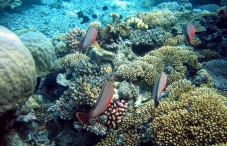
Cairns
Cairns is a practical base for Great Barrier Reef day boats, learn-to-dive courses and liveaboards. Depending on your time, your budget, and your diving certification you can dive in many places around Cairns. Choose nearby outer reefs for a short visit, or a northern Ribbon Reefs/Coral Sea itinerar
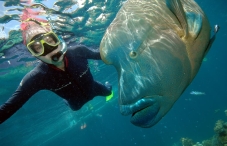
Great Barrier Reef
The Great Barrier Reef is a long reef system off Queensland, not a single dive site. Choose Cairns for the largest range of reef boats and northern liveaboards, Port Douglas for Agincourt day trips, Townsville for MOUA and Yongala access, or the Whitsundays for island holidays and Hardy Reef.
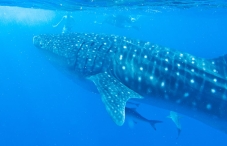
Ningaloo Reef
The Ningaloo Reef is located on the stunning West Coast of Australia. Choose Exmouth for the North West Cape and Coral Bay for a compact reef holiday farther south. This is a fringing-reef destination with shore snorkelling, boat dives and seasonal wildlife trips; it is not part of the Great Barrier
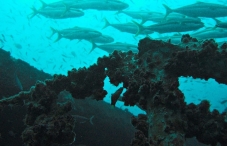
Port Douglas
Port Douglas is a small, beautiful coastal town of North Queensland famous for its beach and reef life. Its main diving choice is a day boat to the Agincourt reef system, with the Daintree area close enough for a separate land day. Do not confuse this with a liveaboard expedition to Cod Hole or Ospr

Whitsunday Islands
When diving in the Whitsunday Islands you have two possibilities: the local spots or going further out on the Great Barrier Reef. Airlie Beach is the mainland base, while Hamilton Island offers a resort-and-airport alternative. Decide whether you want island sailing with some snorkelling or a trip d
Dive spots reviews in Australia
Liveaboard Reviews in Australia



Deep Glen Bay – Dragon Cove near Eaglehawk Neck Tasmania. Weedy Sea Dragons and 10m vis. Good to get local knowledge.
Jervis Bay NSW – Crest Diving. Dent Rock, Murray Reef, Bowen Island. Nuibranchs, Groper, fields of sponges. Vis 15m.
Both diving operators professional excellent local knowledge. Crest Diving took me from a scared beginner to confidant diver Most enjoyable.
Merete
South west rocks outside of Kempsey (eastcoast between Coffs harbour and Port McGuire) is so worth it! The cave dive is amazing and the shark-dive mind-blowing. Would do it again anytime.
You can dive all year round in Sydney. In winter, the coldest water in my experience is 15 Celsius. I’m comfortable wearing a 5mm wettie with an insulated hood and gloves, although very skinny people tend to like a 7mm suit or drysuit in the winter.
Sydney has many good dive sites, including Bare Island at La Perouse, Harbord/Freshwater, Shelly Beach/Cabbage Tree Aquatic Reserve, Fairy Bower, and North Bondi. I’ve seen octopus, cuttlefish, very friendly blue gropers, red Indian fish, pipefish, and loads of other amazing creatures.
Went on a liveaboard to the Great Barrier Reef with Divers Den out of Cairns – very professional outfit, with excellent safety focus and superb crew (Serrio, Sylvester, May and Alice spring to mind among many). Did 7 dives on Norman and Hastings reefs in December 2014. 15-20m vis, plenty of colourful critters and the water was warm enough to dive in togs only – a luxury for me! Cheers, Dave
A great dive in Australia is Fish Rock Cave off South West Rocks, New South Wales.
A 100m plus cave swim through with amazing shoals of fish and an abundance of Ragged tooth sharks, (Grey Nurse) if you are an Aussie or (Sand Tiger) if you are a yank. Loads of Wobbegongs and turtles. Lots of Humpbacks on the way out – one of my best dives ever. Need to be advanced, experienced and not suffer from claustrophobia.
Went on a live aboard with CDC out of Cairns a few years ago. 3 Days, 2 nights and 10 dives. Went to Milln’s and Moore’s reefs. Very disappointing – 8 litre tanks, insisted on diving rules that were draconian and kept blaming Queensland laws – I later found out that everything they said was nonsense. Up on 70 bar and out on 50 bar, checked your air on return and penalised you a days diving if you didn’t have 50 bar back on boat after starting with only 8 litres. Most dives were unsupervised and you had to pay extra to have a DM – there were a lot of beginners from Scandinavia doing dive #5 etc. Being a DM at the time – I ended up looking after them as they started to stick by me – CDC seemed more concerned about the paperwork. As for the reefs – definitely not the best on the GBR – I later learned that there were a lot better places to dive in Queensland
I’m trying to find a dive trip for two (PADI Advanced Open Water Certified) divers that will be arriving in Phegans Bay Aus around December 18th. It’s a surprise Xmas present for them, do you have a place or something to recommend?
Pingback: The Myth of Scuba Liveaboards - Johan's Dive Resort
Pingback: The Myth of Scuba Liveaboards - Visit Subic and the World Visit Subic and the World
Pingback: The Myth of Scuba Liveaboards - Subic Bay Dive Association
Pingback: Cairns Liveaboards, Not Just for the Experts – DeeperBlue.com
Is this site an advert for padi padi divef this padi diver that , there are many more diver training institutions that do better job at education padi is just the most commercial , I have been an instructor since 1983 trained thousands of divers I am a paramedic 25 years and diver medical technician as well
Now about the diving we do have the most ridiculous overly legislation in the world mainly in queensland , note the rarity of dive shops in queensland , most dive instructors now couldn t be bothered dealing with the bureaucrats and the ridiculous amounts of paperwork to keep the bureaucrats in a job our safety record is no better than the rest of the world .
Unless you use the example you made most dive shops close down
Now for the diving try the southern great barrier reef lady musgrave capricorn bunker group outstanding
But if you never get to australia don t panic I have found diving squalky as goid in other parts of the workd as goid or better without the bureaucrtaic bullshit of our qovernment who states that the ISO STANDARDS ARE NOT GOOD ENOUGH lets make our own confusing rules
Sorrry I did not fix spelling errors on a moving boat
I am one of the First to EVER Dive the HMAS Tobruk the latest dive wreck in Australia it is HUGE
Top of deck in about 12 metres of water then the bottom at about 30 metres
This vessel lays on its starboard side , many swim throughs not to mention the gigantic propellers
Bookings will be open about late August all going well
Tobruk Dive Centre Hervey Bay will be conducting dive tours from Hervey Bay this is about a 25 nautical mile trip two dives 2 cylinders and weight belts included with the trip
Put this on your itinerary if you are travelling to Australia
lots of different animals and plants. water vision isn’t the best in Sydney and can get cold in winter but absolutely beautiful.
I love you australia dive for me is a funy work
Lady Musgrave Island and Fairfax Island, Great Barrier Reef, Australia.
I was diving Lady Musgrave Island booked with “Come Dive with Us” on Saturday 5th October 2019.
We caught the big Lady Musgrave Experience catamaran “Reef Empress” to the islands (very comfortable boat), then divers transfer to a smaller boat “Seacat” for the days diving.
We went to Fairfax Island for the first dive. A couple of reef sharks, lovely plate coral, some brain coral, fans, etc, viz that was amazing and a strong current made this a very lazy drift dive… I think I actually had to kick twice. Very relaxing, with lots to see.
The 2nd dive only had a mild current, with deep canyons, turtles, massive crays, a white tipped reef shark, as well as most of the usual suspects such as clown fish, parrot fish and trigger fish just to name a few.
Both dives were awesome, the trip and service on the boats great, included food and drink.
I have dreamed in my life that I want to dive in Australia once.I have explored under water with Gomantak scuba only PADI scuba diving in malvan,maharashtra,india.They have multiple dive sites. LINK REMOVED
i was attacked by a junkie on ice named herbert, he took my shoes then my family. diving was ok but 7/10.
Diving in Australia is an unforgettable experience! With its stunning coral reefs, diverse marine life, and crystal-clear waters, it’s a true paradise for divers. The Great Barrier Reef is, of course, the star attraction, but there are so many other incredible spots to explore along the coast. From vibrant coral gardens to shipwrecks, every dive reveals something new.