
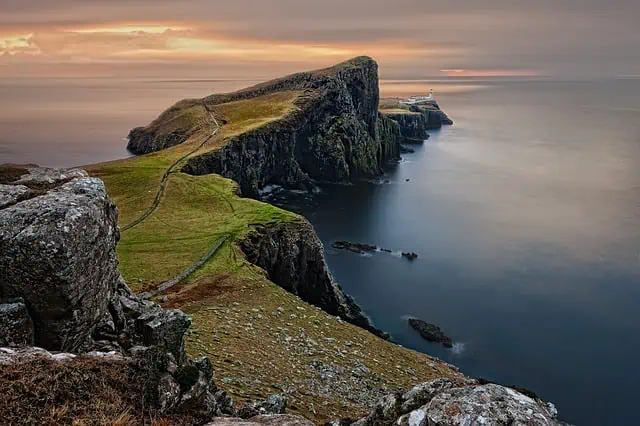

If you have dived in Scotland before, please share your experiences: Dive spots you would recommend, which Dive Center you used, Fishes & Diving, Visibility, Currents, etc. Please post your comments in the section below, by doing so you will help fellow divers to plan their next trip

Scotland is a cold-water diving destination for wrecks, rocky reefs and sea-loch life, with Scapa Flow its best-known wreck-diving area. Day boats, clubs, shore outings and genuine liveaboards offer quite different holidays. Matching the trip to your experience matters more than choosing the most famous name.
Scotland is a beautiful country to visit, rich with history and diversity. Those traits continue underwater. A well-planned stay can be as rewarding for the time on the coast as for the dives themselves.
Updated November 2026.

In this page you will find more detailed information about scuba diving in Scotland.
Table of contents
Best Dive Review
- Scapa Flow, Orkney: the remains of the German fleet scuttled in 1919 are the principal draw. Wreck depth, orientation and visibility make preparation important; these are not interchangeable beginner sites.
- St Abbs: rocky reefs and the formations around Cathedral Rock attract divers to the southeast coast. Overhangs and swim-throughs are overhead environments, not an invitation to enter beyond your training.
- Oban and the west coast: day boats and sea-loch outings offer alternatives to a full week of wreck diving. The exact site depends on tide and weather.
- Shetland: a separate expedition choice with substantial wreck diving. Travel, gas requirements and the agreed depth range need organising in advance.
The remote islands, including St Kilda, require a specifically arranged and weather-dependent expedition. They should not be treated as a guaranteed add-on to a mainland day trip.
Detailed dive-site locations
These published reference positions help compare dive locations with your travel base. They are not verified entry points, moorings or an underwater navigation guide. Site access and the day’s dive plan must be agreed with a local operator.
-
A Scapa Flow cruiser on a slope, with the bow around 25 m and the stern around 38 m. The map locates the wreck, not a shot line or underwater route. Site description and position.
-
A Scapa Flow cruiser lying on its starboard side, with parts of the wreck around 22 m and seabed around 36 m. Depth and cold-water preparation should match the planned dive. Site description and position.
Positions checked against the linked descriptions on 5 November 2026; map imagery and local conditions can change.
Watch: Wreck diving in Scapa Flow
How to dive Scotland?
The diving arrangement is worth settling before accommodation, because the departure harbour shapes the week. A day charter can return to a harbour each evening, whereas a liveaboard includes a berth and may have a different meal plan. Scapa Flow’s boat directory illustrates both models. An individual berth and a whole-vessel charter are different bookings.
MV Valhalla is a genuine liveaboard offering Scottish wreck-diving programmes. In contrast, the Huskyan package can combine boat diving with Divers Lodge ashore. The difference matters for companions, room space and evenings in town. A dated organiser example for 1–7 August 2027 on Huskyan is £1,500 per person by card, with six nights ashore and five diving days; it is not an all-inclusive cruise tariff. Nitrox, helium and food are listed as extras.

Best time to dive in Scotland
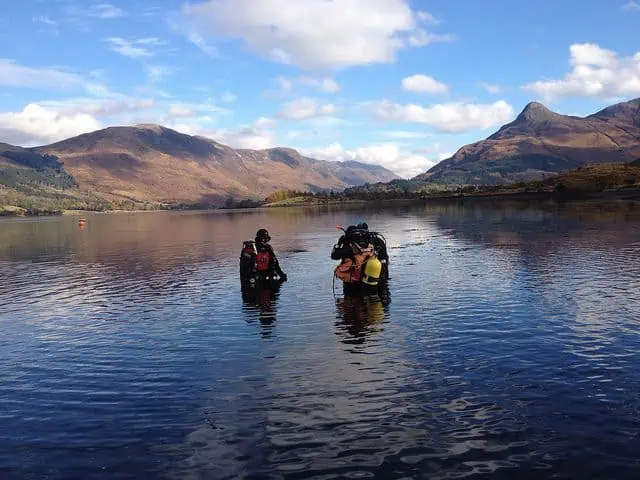
The typical diving season is April to October, as described by PADI’s Scotland guide. Winter and shoulder-season diving can run where conditions and operators allow. Longer summer days help with touring, but wind, swell and plankton can still change a dive plan. Sea lochs provide different options, not a universal guarantee of shelter.
Top liveaboards in Scotland according to divers reviews
Dive courses
Drysuit familiarity, buoyancy and reliable surface-marker skills are useful preparation for repeated Scottish dives. Wreck training does not automatically qualify a diver for penetration or decompression. The intended depths, gas and buddy arrangements help determine which training and equipment fit the charter.
For example, Valhalla’s FAQ recommends drysuit and cold-water experience and comfort around 35 m for its Scapa diving; it describes many Shetland wrecks around 35–40 m. Those are operator examples, not requirements for every Scottish dive.
Scuba Diving conditions
A broad Scottish water-temperature guide is roughly 4°C in early spring to 14°C in late summer; locality and depth change the picture. Repetitive diving calls for suitable thermal protection, and many divers choose a drysuit. Visibility is variable: bloom, sediment, swell and recent weather make a fixed 10–30 m promise unhelpful.
Currents can be strong at particular wrecks and channels. The skipper determines the workable tidal window, within the limits of each diver’s training and gas plan. Insurance needs to cover the actual depth and activity; flights and mountain journeys require appropriate post-dive surface intervals.
Snorkelling in Scotland
Travelling with a non-diver?
A shore base can suit mixed parties particularly well: a companion can explore Orkney or the west coast while divers are out. The Scottish Wildlife Trust’s snorkel trails identify locations and access guidance, but they are not a guided boat service. Cold water, tide and sea state still govern whether a session is suitable.
No general non-diver fare or acceptance policy was verified for Valhalla or the Huskyan arrangement. Those details, shore access and any organised excursions need confirmation for the exact departure. A dive charter may spend hours at a wreck with no companion programme; a berth or sundeck alone does not prove otherwise.
Fishes and Coral
Anemones, soft corals, crustaceans and fish bring colour to Scottish rock and wreck surfaces. Seals may appear at some locations. Dolphins, porpoises, minke whales and basking sharks are possible coastal wildlife encounters, but should not be promised as routine scuba sightings. Good buoyancy helps protect the growth that makes these sites special.
Six fish to recognise around Scotland
Ballan wrasse
Mottled colours and thick lips suit a fish at home among Scotland’s rocky reefs and kelp.
Cuckoo wrasse
The male’s orange and blue colours are a bright contrast to the surrounding kelp.
Pollack
A streamlined coastal fish that may appear above rocky ground and wrecks.
Conger eel
A powerful eel associated with crevices and wreck shelter; a quiet look is more rewarding than disturbance.
Small-spotted catshark
Also called the lesser-spotted dogfish: a small bottom-dwelling shark, not a miniature reef shark.
Atlantic mackerel
Blue-green backs carry dark wavy markings; inshore shoals are particularly associated with summer.
These are representative illustrations, not sighting records. Habitat, season and the chosen site determine what may be encountered. Illustrations created for Divezone, November 2026.
The Wildlife Trusts’ marine species guide
Diving Safety
If you are planning an upcoming dive trip or travelling to Scotland, it is a really good idea to invest in travel insurance for scuba diving, because you never know what could happen and when you might need it (because accidents do happen!). I recommend this diving insurance as they offer worldwide coverage and focus on providing scuba divers a quality insurance and medical assistance service.
For a diver who enjoys cold water and history, Scotland offers far more than a single famous wreck. A realistic depth range, a comfortable base and a skipper whose programme fits the group leave room for the weather to shape the week.
Frequently asked questions
Is Scapa Flow suitable for a new diver?
Some local sites and training are shallower, but the major wrecks can demand substantial cold-water and depth experience. A programme agreed with the operator should match that experience.
Are Scottish dive boats all liveaboards?
No. There are day charters, boats with accommodation aboard and packages with lodging ashore.
Is a drysuit useful in summer?
Yes, especially for repeated dives. Familiarity and suitable insulation matter as much as owning the suit.
When is the main season?
April to October is a broad planning window. Individual boats may operate outside it; local conditions decide the diving.
Can my non-diving partner join?
Acceptance, fare and the actual programme depend on the boat and departure. A shore-based stay can offer more independence.
Does a wreck qualification allow penetration?
Not automatically. Overhead and decompression activities require appropriate training, equipment and planning for the specific dive.
Photos Scotland
Travel Guide
Now that you know all about the underwater world, you might want to start planning your scuba holiday! Check out our Scotland Travel Review for information about how to get there, activities and excursions, where to stay, and more.

I have started snorkeling in Scotland in May 2018. From the Firth of Clyde around Turnberry golf course, towards Largs, Ardnamurchan, the far north west from Ullapool to Durness and north of Aberdeen on the east coast. I have encountered seals, cat sharks, the amazing red lions jellyfish, coral, star fish and so much more. Photos and videos are shared regularly on Snorkel Scotland on Facebook, for those who want to see what Scotland has to offer.
Hi Maja!
That’s great to hear! Thank you so much for this great input and for reading Divezone!
Safe bubbles, always!