If you have dived in British Columbia, Canada before, please share your experiences: Dive spots you would recommend, which Dive Center you used, Fishes & Diving, Visibility, Currents, etc. Please post your comments in the section below, by doing so you will help fellow divers to plan their next trip

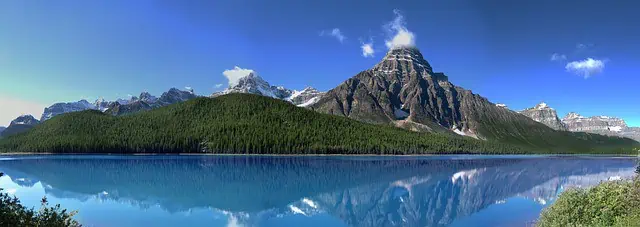
British Columbia is a cold-water diving destination of rocky reefs, kelp, colourful invertebrates and memorable fish. Vancouver’s shore sites can fit into a city stay; Vancouver Island and the Sunshine Coast reward a longer trip with transport planned around the diving.
The area is remarkable for its islands, deep fjords and many inlets. In other words, British Columbia’s temperate diving benefits from a huge playground! The pleasure is in getting close enough to notice the life on a rock face, with a good light and enough warmth to enjoy it.
Planning information checked 17 November 2026.
In this page you will find more detailed information about scuba diving in British Columbia, Canada.
Table of contents
Best Dive Review
Where to base your BC diving
Vancouver and Howe Sound
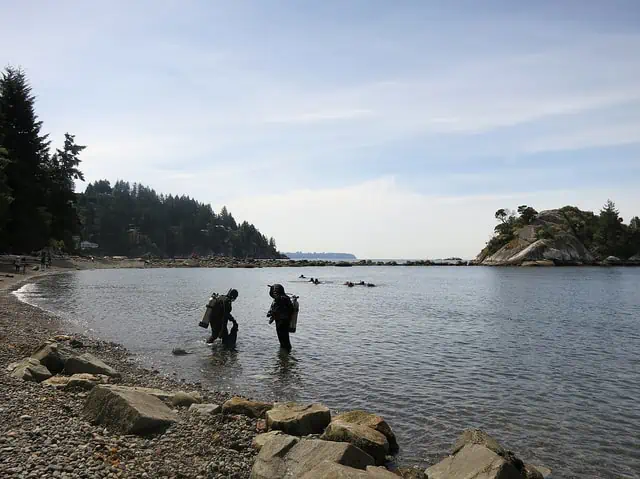
Whytecliff and Porteau Cove are familiar shore-diving choices. A guided first day is useful for learning entries, local conditions and cold-water routines. An easy journey from the city does not make every underwater profile easy.
Victoria and southern Vancouver Island
A city base can combine shore dives, boat trips and time out of the water. Travel to the island is a separate part of the plan, and the departure point of a charter matters when choosing accommodation.
Northern Vancouver Island and the Sunshine Coast
Port Hardy and other coastal bases offer a more remote trip. Current-sensitive boat diving, limited local services and the journey between towns favour a slower itinerary with the operator and lodging booked together.
The Artificial Reef Society of British Columbia identifies the aircraft reef off Chemainus as a Boeing 737-200, not a 747 or “474”. Artificial reefs remain dives with depth, current and overhead-environment considerations; a wreck exterior can be rewarding without entering it.
Three Howe Sound shore-diving references
Numbered reference positions for trip planning only, not navigation or underwater entry instructions. A dive guide selects the actual entry and route for current conditions.
Mapped sites: locations and character
- Whytecliff Park. The inner cove and outer walls offer different dives; the more exposed channel is not a beginner extension.
- Porteau Cove. Shore diving with artificial-reef structures; park rules prohibit divers using the boat launch.
- Kelvin Grove. A shore-entry option with a gear-carrying walk and local parking restrictions.
Site positions: Whytecliff, Porteau Cove and Kelvin Grove. Park access: BC Parks.
Watch the diving video on YouTube. Footage illustrates the destination; sightings and conditions vary.
How to dive British Columbia, Canada?
Shore days, charters and lodge stays
Dive centres run local shore outings and day boats, while more remote trips may pair a lodge with diving. These arrangements are distinct from a multi-day scuba liveaboard. An Inside Passage sightseeing cruise is not automatically a dive trip, even when its route passes excellent diving country.
A guided shore day is a manageable introduction if you already have the required certification and recent experience. Vancouver Diving Locker’s Local Safari includes two guided shore dives, transport, tanks and weights; other rentals cost extra. Its current requirements include a dive within the last twelve months and drysuit use October–June. These are operator conditions, not province-wide rules.

Best time to dive in British Columbia, Canada
Seasonality is a trade-off
BC diving runs across the seasons, but conditions are not constant. Plankton can change visibility, winter brings shorter days and colder surface intervals, and wind can affect a sheltered-looking inlet. Being inside the coast does not remove weather or tidal-current planning.
For a first cold-water trip, a date that allows comfortable preparation, suitable instruction and a flexible schedule is often more useful than chasing a single “best month”. Summer makes a mixed land-and-sea holiday easier to organise; experienced local divers may favour other periods for particular sites.
Top liveaboards in Canada according to divers reviews
Dive courses
Dry suit diving is the norm for many local divers. Training and practice in the actual suit are useful before adding unfamiliar currents, a boat entry or a deeper profile. A warm-water certification alone does not demonstrate comfort with extra weighting, thick gloves and suit buoyancy.
A refresher or guided orientation can make the first day more enjoyable. Vancouver Diving Locker’s local-diving guide explains the role of drysuit training and gradual experience building.
Scuba Diving conditions
Cold water, tides and realistic visibility
Thermal protection is part of dive planning throughout the year. Surface warmth does not tell the whole story at depth, and repeated dives can be colder than a single short outing. The operator’s recent temperature report is more useful than a province-wide number.
Visibility can vary greatly, so a blanket promise of 30 metres is misleading. BC Parks warns that tide, wind and weather can change suddenly in Howe Sound. Site choice, current timing, the exit and surface signalling need a local briefing. A protected bay and an exposed passage are very different propositions.
Snorkelling in British Columbia, Canada
Travelling with a non-diver?
A Vancouver or Victoria base gives companions an independent day ashore. For a shared outing, Sea Dragon Charters explicitly offers ride-along and reduced non-diver fares. The amount and availability for a specific departure must be confirmed; there is no verified universal companion discount. Children under eight need an accompanying adult in the water on its snorkelling outings.
Its separate Snorkel, Kayak and Seal Adventure departs Horseshoe Bay for Pam Rocks, with snorkelling and kayaking equipment included. Wildlife decides whether an encounter happens. This is an activity tour with its own conditions, not a promise that any scuba charter includes guided snorkelling.
Fishes and Coral
Meet the temperate reef
Anemones, sponges and giant Pacific octopuses are part of BC’s appeal, alongside these six fish entries. The illustrations are representative. Kelvin Grove’s contributor listing supports the reef-fish groups, while Diving Locker’s wildlife FAQ describes dogfish among the less predictable sightings.
A large head and mottled body can blend surprisingly well into a rocky bottom.
The long body and substantial head make a memorable sight near a rocky shelter.
Spiny fins and varied colours reward a closer look without approaching too closely.
These smaller, patterned reef fish bring detail to a slow shore dive.
Camouflage and broad pectoral fins suit a life close to the seabed.
Small sharks are a less predictable encounter; they are a bonus, not a booking promise.
The colourful life is a reason to refine buoyancy, not to touch or collect it. Whale watching is a separate surface activity; whales are not a routine underwater promise.
Diving Safety
If you are planning an upcoming dive trip or travelling to British Columbia, Canada, it is a really good idea to invest in travel insurance for scuba diving, because you never know what could happen and when you might need it (because accidents do happen!). I recommend this diving insurance as they offer worldwide coverage and focus on providing scuba divers a quality insurance and medical assistance service.
For warm-water divers, learning to dive in British Columbia may have some challenges. They can be well worth the effort to explore this stunning region of Canada. A comfortable first dive leaves more attention for the surprising colour on the reef.
British Columbia diving questions
Do I need a drysuit?
Many operators require one during colder months. The specific trip rules, water conditions, exposure time and your training determine the appropriate equipment.
Can I dive without renting a car?
Some guided shore outings include transport from the dive shop. The meeting point, gear collection and return time still need to fit your accommodation.
Is an Inside Passage cruise a scuba liveaboard?
No. A sightseeing itinerary does not establish a diving programme. Only a specifically confirmed dive trip should be booked as one.
Photos British Columbia, Canada
Travel Guide
Now that you know all about the underwater world, you might want to start planning your scuba holiday! Check out our British Columbia, Canada Travel Review for information about how to get there, activities and excursions, where to stay, and more.

Diving Reviews for this region
Eastern Canada
Freshwater wrecks, St Lawrence river dives and Atlantic marine life, explored from carefully chosen local bases.
Wanna Learn Squba diving… where in Kelowna?
Hello Roberto! First, I’d like to thank you for reading Divezone and taking the time to drop your question here!
So, in Kelowna, I’m guessing most of the diving training will be done in pools, or in the lakes – unless some dive centers organize trips to the coast. Anyway, when it comes to finding a dive center in particular, Google is your best friend! This way, you will be able to search for one that is near where you live. You can search for “dive centers in Kelowna” but also check with any watersport centers if they offer diving training.
Hope this helps!
Wishing you the best bubbles and a nice maiden dive!
If you’re planning on coming to British Columbia to dive you’ll want to make sure you’re coming during a time when visibility is at it’s best. Generally, October to February are the best months, with no algae blooms, and very clear water. If you come during March, April, or May you’ll be coming just after the herring spawn and the visibility could be horrible. During the summer months visibility is hit or miss, it can be really good one day and not so good the next. In the winter though, the visibility is fairly consistent.
Hello Scuba BC! Thanks for the tips on when it’s best to visit BC when it comes to scuba diving! It’s always amazing to have input from a local!
Also, thanks for reading Divezone and sharing this review with us here! Wishing you clear water and only the best bubbles!
I recently went diving in British Columbia, Canada, and it was absolutely incredible. The water may be chilly, but the underwater world around Vancouver Island and the Gulf Islands is unlike anything I’ve seen — giant Pacific octopus, wolf eels peeking from rocky crevices, and forests of lush kelp swaying in the currents. Every dive felt like discovering a new hidden corner of the ocean.
are perfect for some casual online fun in the evening.