
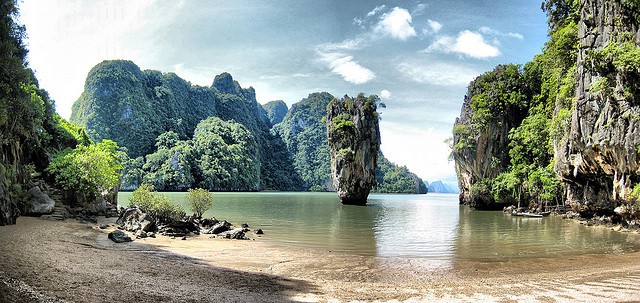
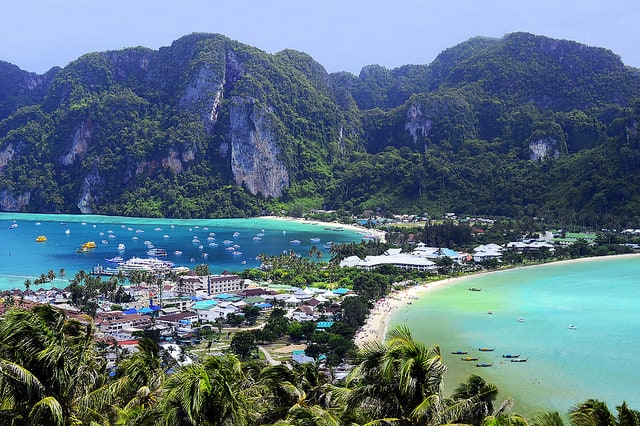
Koh Phi Phi’s white beaches and dramatic limestone scenery are a large part of its appeal. For a diving holiday, the practical centre is Phi Phi Don: accommodation, restaurants and local dive boats share a small island, while quieter beach resorts offer a different pace from the busy village.
Maya Bay, made famous by The Beach, is on neighbouring Phi Phi Leh. It is a managed national-park visit, not the island where most visitors sleep. Phi Phi is not automatically quieter than Phuket; the particular beach and hotel location matter.
In this page you will find practical information to plan a scuba diving trip to Koh Phi Phi:
Table of contents
Where to stay?
I usually use this website to book in advance my hotels in Koh Phi Phi, Thailand as they usually have the lowest rates I find. I like it because it's free to cancel and change the dates.
Accommodation ranges from simple rooms to beach resorts. A base near Tonsai simplifies many dive-centre meetings and ferry arrivals. A more secluded beach can be appealing for a quiet stay, but adds boat-transfer questions and may limit spontaneous trips into the village.
Noise varies considerably by location, particularly around nightlife areas. The useful hotel questions concern walking access, evening noise, luggage handling and the route to the dive meeting point. A low room rate can lose its appeal if every outing needs another paid boat ride.
Activities and excursions in Koh Phi Phi
The limestone scenery is enjoyable above water as well as below it. Beach time, authorised snorkelling outings and a walk to a viewpoint can fill a non-diving day. Heat and steep paths make footwear and timing part of the experience.
Maya Bay is a controlled visit reached through the park’s landing arrangements at Loh Samah. Swimming inside Maya Bay is prohibited. A tour should identify which other stops actually permit swimming or snorkelling, rather than using an old photograph as the programme.
For a non-diving companion, staying on Phi Phi Don offers more independent choices than spending every day on a scuba boat. Joining a diving excursion requires confirmation of acceptance, suitable activities, supervision and the companion fare; a discount is not automatic.

Best time to visit Koh Phi Phi
November to April is a common choice for more settled Andaman weather. In the wetter months, boats and local diving may still operate, but swell, rain and park restrictions can alter a day’s plans. A lower room rate does not guarantee that every excursion will run.
Maya Bay’s 2026 seasonal closure ran from 1 August to 30 September. The park can impose additional restrictions, and the rules for one bay should not be confused with access to the whole archipelago.
Health and Safety
A Phi Phi stay depends on sea transport. Suitable insurance, personal medication, offline booking details and a realistic return buffer help make that manageable. An onward flight immediately after the last ferry leaves little margin for weather disruption.
Divers also need an appropriate no-fly interval. DAN’s guidance distinguishes a single no-decompression dive from repetitive or multiday diving, with minimum intervals of 12 and 18 hours respectively for asymptomatic divers; decompression diving needs longer. A spare mainland night can accommodate both transport uncertainty and a longer planning buffer.
If you are planning an upcoming dive trip or travelling to Koh Phi Phi, it is a really good idea to invest in travel insurance for scuba diving, because you never know what could happen and when you might need it (because accidents do happen!). I recommend this diving insurance as they offer worldwide coverage and focus on providing scuba divers a quality insurance and medical assistance service.
Where is Koh Phi Phi located in the world?
The Phi Phi archipelago lies in the Andaman Sea in Krabi province, southeast of Phuket. Phi Phi Don is the accommodation and transport base; Phi Phi Leh includes Maya Bay. The surrounding protected area is Hat Noppharat Thara–Mu Ko Phi Phi National Park.
How to get to Koh Phi Phi?
Airport, mainland pier, island arrival
Phuket and Krabi are the main air gateways for a Phi Phi stay. A flight is followed by a road transfer and a boat crossing; Phi Phi has no airport. A late flight may require a mainland night rather than an improvised connection to the last boat.
Andaman Wave Master lists Phuket–Phi Phi ferry journeys of around two to three hours and Krabi–Phi Phi around two hours, depending on the service and destination. Airport transfers are an extra option in its booking system. These are crossing estimates, not total airport-to-hotel times.
Tonsai and Laem Tong are different arrival choices. A remote resort may require an additional transfer, even after reaching Phi Phi. The ferry operator asks passengers to check in 30 minutes before departure; the hotel should confirm which ticket destination fits its location.
Do I need a visa for Koh Phi Phi?
Thailand’s national entry requirements apply, with the permitted stay depending on nationality and visa category. The Thailand travel guide links to official guidance. The free TDAC arrival form is separate from visa permission and is completed within the three days before arrival.
Getting Around
The main village is explored on foot, with boats connecting more distant beaches. Phi Phi is not a conventional road-and-taxi island. Luggage, steps, uneven paths and the distance from the pier can matter when choosing accommodation.
Longtail transfers and island outings depend on sea conditions and the agreed programme. The fare, pickup point, return arrangement and any park fee should be clear. A remote beach transfer after dark is not something to assume is included in a room booking.
Phi Phi travel questions
Should I book Tonsai or Laem Tong as my arrival point?
That depends on the hotel. They are different parts of Phi Phi Don, and some resorts need an additional boat transfer.
Can I stay overnight on Phi Phi Leh?
The normal accommodation base is Phi Phi Don. A Maya Bay excursion is a national-park visit, not a resort stay on Phi Phi Leh.
Is Phi Phi a convenient base for the Similans?
No. Phi Phi local diving and a northern Andaman trip are separate travel segments, requiring transfers and a dedicated northern programme.
Sources and planning references
Ferry routes and crossing estimates · Pier, check-in and resort transfers · Maya visitor rules · 2026 conservation closure · DAN flying after diving · Official TDAC · checked 12 November 2026.
Share your Koh Phi Phi experience
Koh Phi Phi Photos
Scuba diving
You will find all information about sea life, best time to visit, top dive spots, etc. in our review: Koh Phi Phi Diving

Diving Reviews for this region
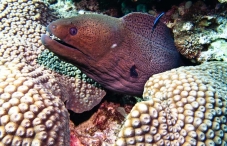
Koh Phi Phi
An island base for Bida reefs, limestone walls and local dive trips, with courses and varied reef life close to Phi Phi Don.
If you have been to Koh Phi Phi before, please share your experiences, ideas and feedback (Hotel, Excursions, General Feeling,…) in the comments section below, by doing so you will help fellow travellers to plan their next trip