Toya Pakeh, also written Toyapakeh, rewards an interest in the reef itself. Walls, crevices and a sloping coral field create a varied underwater landscape at the northern end of the channel beside Nusa Penida.
What gives this dive its character
Large coral formations share the scene with schooling fish and smaller animals sheltering in the reef. Reeflex lists indicative visibility of 15–30 m and water temperatures of 18–28°C, with changing flows and thermoclines. These ranges describe possible conditions, not a forecast.
Giant trevally, moray eels, scorpionfish and reef sharks are among the documented fish, with possible seasonal mola. Nudibranchs offer a different scale of interest among the coral.
Meet the reef
Six fish or fish groups recorded in local site descriptions. These illustrations help tell them apart; encounters change from dive to dive.
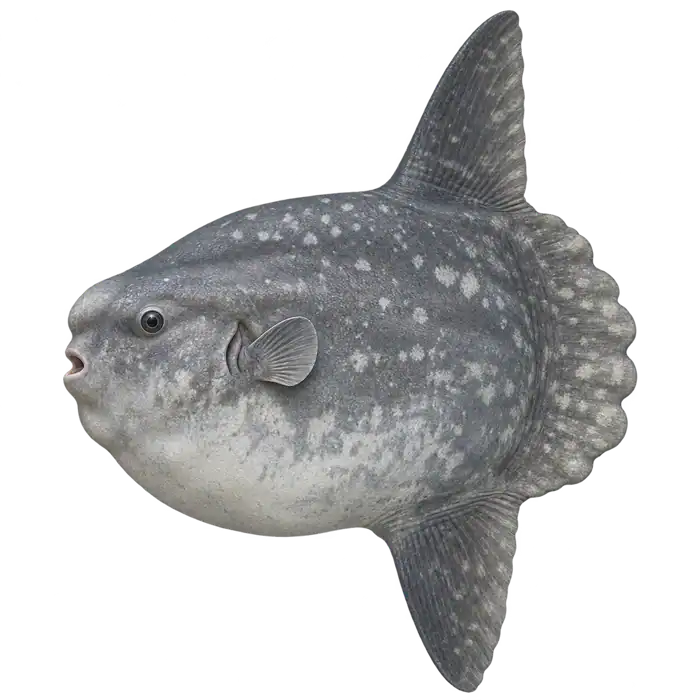
Giant sunfish
Mola alexandrini is documented at Toyapakeh’s cleaning areas. Conditions and the group’s limits determine the dive, with or without sunfish.
Site record: Reeflex Divers — Toyapakeh.
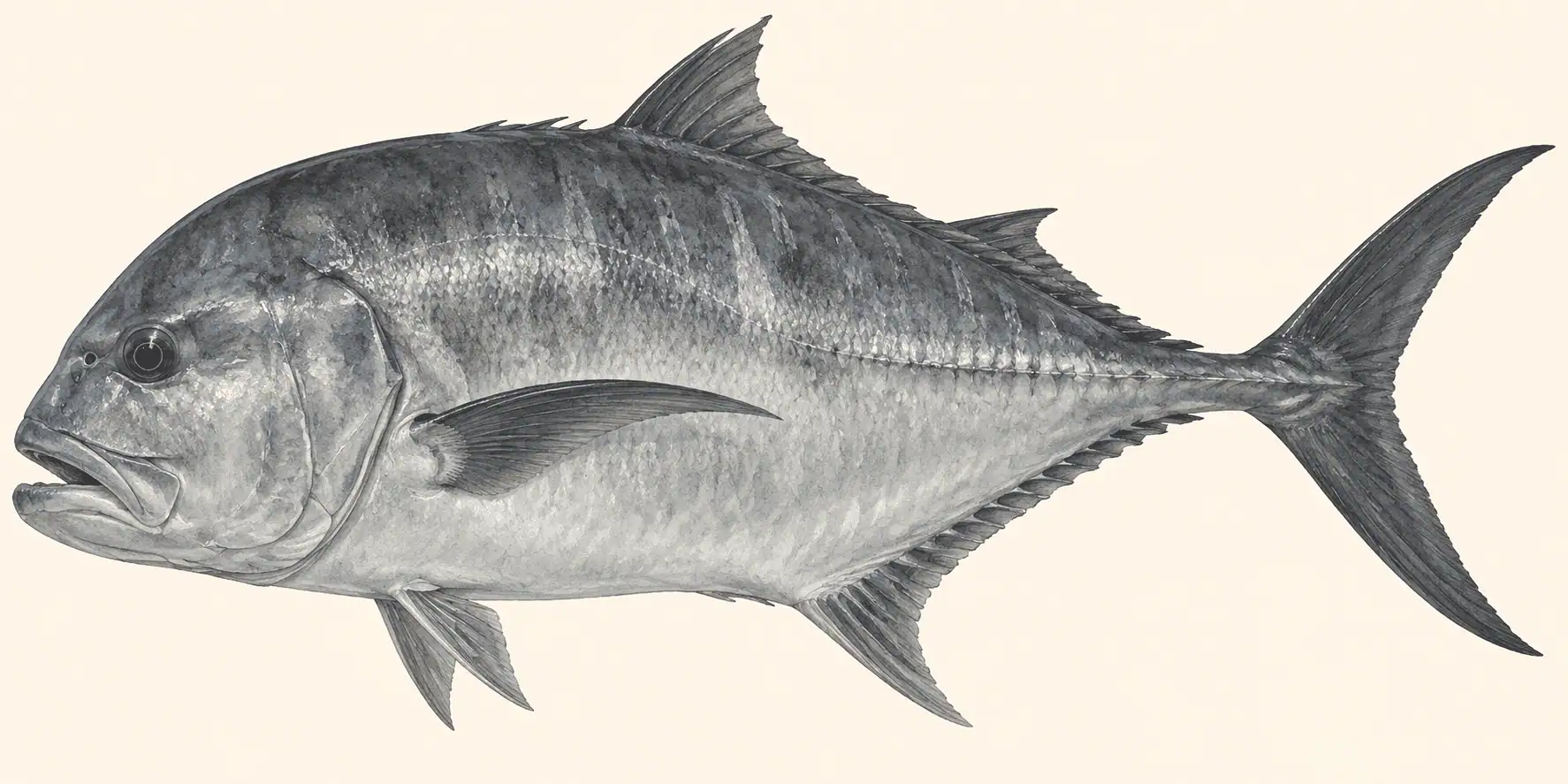
Giant trevally
One of the larger fish specifically identified in the operator’s Toyapakeh account.
Site record: Reeflex Divers — Toyapakeh.
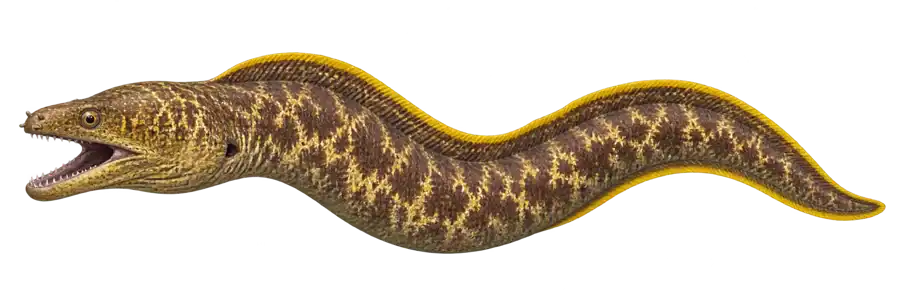
Moray eels
A yellow-edged moray illustrates the group found around the wall; this is not an exact species record.
Site record: Reeflex Divers — Toyapakeh.
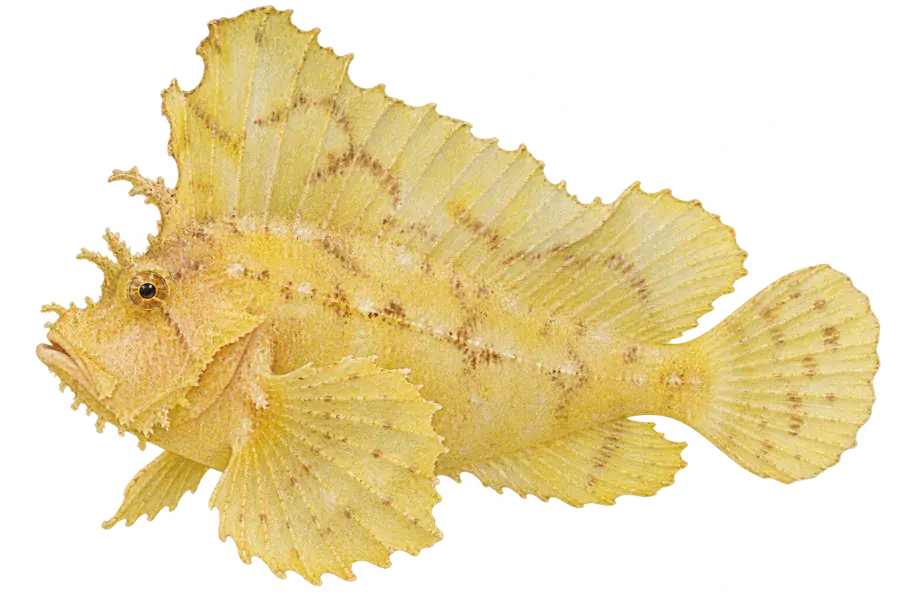
Scorpionfishes
A leaf scorpionfish represents the scorpionfish group shown in the site account, rather than a confirmed leaf-fish resident.
Site record: Reeflex Divers — Toyapakeh.
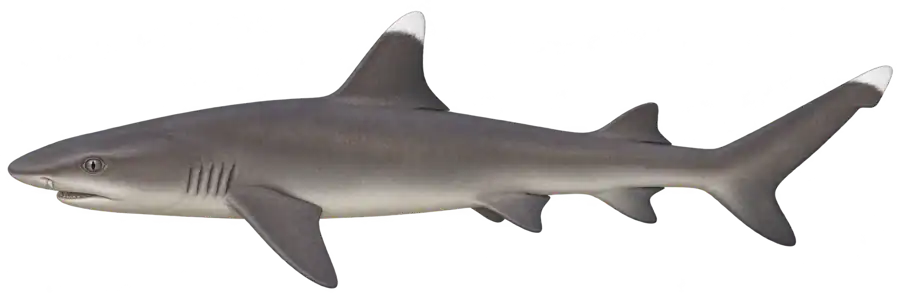
Reef sharks
The whitetip drawing represents the broader reef-shark group recorded here.
Site record: Reeflex Divers — Toyapakeh.
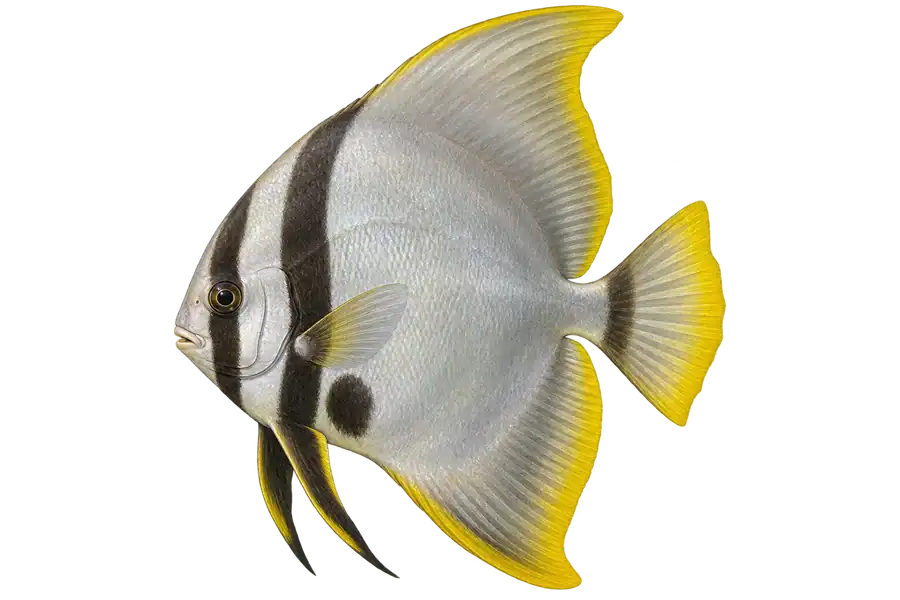
Batfishes
A longfin batfish illustrates the group reported alongside Toyapakeh’s corals and schooling fish.
Site record: Bali Diving Co — Toyapakeh.
Wildlife sources and illustration notes
Local site descriptions checked 18 November 2026: Reeflex Divers — Toyapakeh; Bali Diving Co — Toyapakeh.
Illustrations made for Divezone, including AI-assisted artwork, are not photographs or evidence of a sighting. When a source identifies only a family or group, the drawing is a representative example rather than a species record.
The reef in perspective
This interpretive view brings together the main relief features shown on Reeflex Divers’ site plan. It is not a survey: distances, slope shapes and individual coral blocks are symbolic, and the depth bands are approximate.
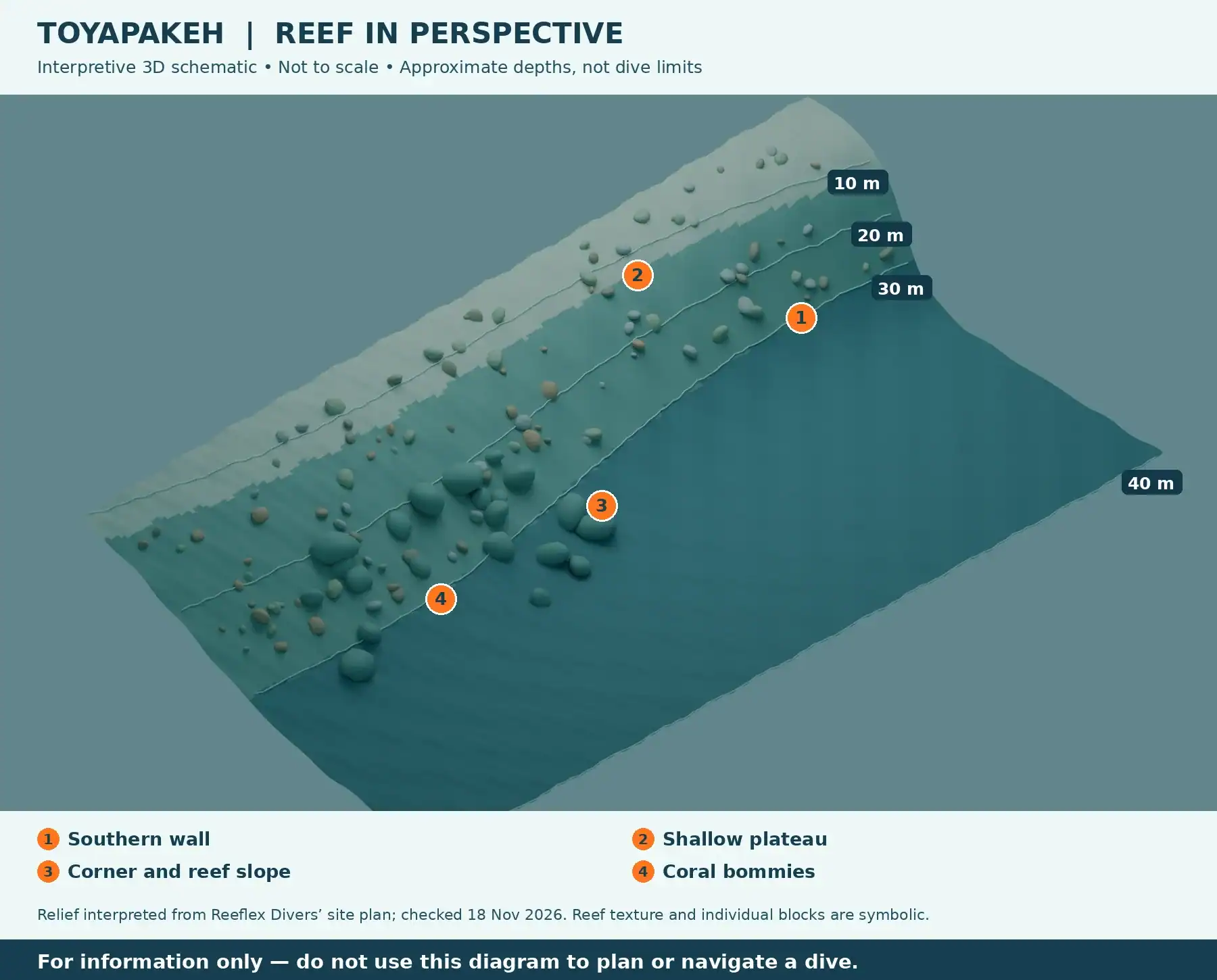
- Southern wall
- Shallow plateau
- Corner and reef slope
- Coral bommies
For information only — do not use this diagram to plan or navigate a dive. It does not replace your operator’s current briefing. The illustration defines neither an entry or exit point nor a recommended route or depth; tides and conditions affect the dive.
Spatial reference: Reeflex Divers’ Toyapakeh site plan, inspected 18 November 2026. The source artwork has not been reproduced.
Where is Toyapakeh?
Toyapakeh lies at the northern end of the channel between Nusa Penida and Nusa Lembongan. The marker below is the approximate site reference published by PADI, not a boat departure point, shore entrance or navigational waypoint.
Site reference: -8.68277, 115.48176 — PADI’s Toyapakeh listing, checked 18 November 2026. Your local operator confirms the actual entry and pickup.
Before the boat ride
Is every Toya Pakeh dive advanced?
Operators use different areas and programmes. Reeflex classifies its route for advanced divers; a shallow-bay description should not be applied to the deeper wall.
Is there a fixed route?
No. The current, planned depth and group determine which part of the reef is appropriate. A map cannot replace that briefing.
Your dive can help the next diver
Your visit date, conditions and the moments you remember make a useful dive log. What would you tell someone planning their first visit?
Sources and further planning
Site information checked on 17 November 2026. Operator descriptions refer to their programmes; conditions and wildlife vary.
reeflexdivers.com — site information
crystal-divers.com — site information
Nusa Penida and Nusa Lembongan diving guide · Bali diving guide
You can dive Toya Pakeh all year long. Access: Boat. See the map of Toya Pakeh on the right for the exact location.
Fishes you may spot while diving Toya Pakeh
-
 Mola Mola
-
 Nudibranch
-
 Turtle
... and more fishes & sea life, Reef Fish

Photos
-
 Yellow Seahorse in Lembeh StraitPhoto by Agnes Tjandranegara
-
 Blue Nudibranch in Lembeh StraitPhoto by Rich Guest
-
 Mola Mola And Moorish IdolPhoto by Jihye Lee
-
 Clown fishes waiting in front of their blue anemone housePhoto by Jihye Lee
-
 Blacktip Shark patrolling the crystal clear water... EPIC photo!Photo by Yann Hubert
-
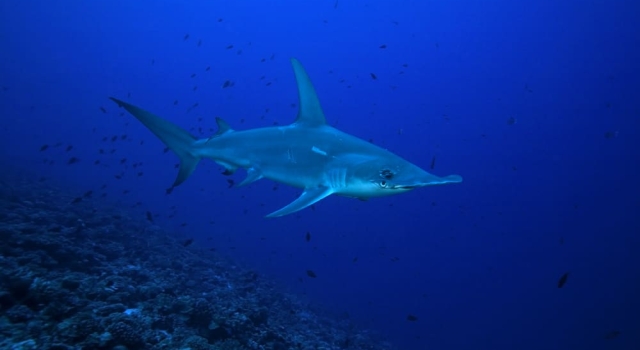 Huge Hammerhead Shark patrolling the reef in French PolynesiaPhoto by Yann Hubert
-
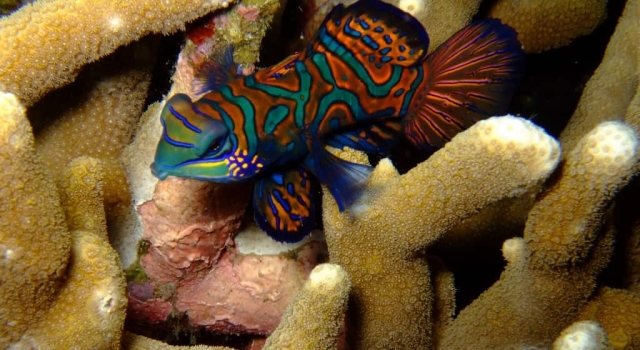 Beautiful & Colorful Mandarin FishPhoto by Rich Guest
-
 Lion Fish swimming in crystal clear waterPhoto by Agnes Tjandranegara
-
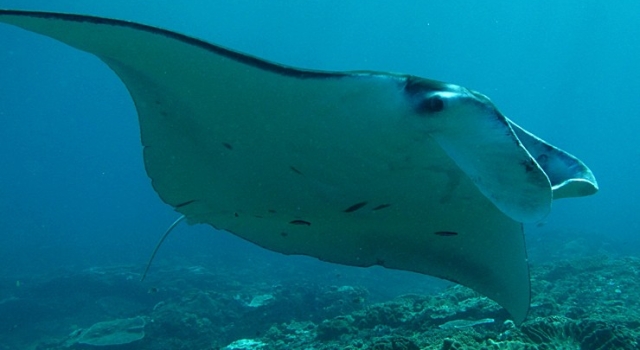 Flying Ray Manta in Bali!Photo by Jihye Lee
-
 Surreal LifePhoto by Jihye Lee
Diving Reviews for this region

Nusa Penida / Nusa Lembongan
Manta cleaning stations, seasonal sunfish and lively coral drifts make Penida and Lembongan memorable. The best dive is the one matched to the current, swell and experience of the group.
Liveaboard Reviews in Nusa Penida / Nusa Lembongan
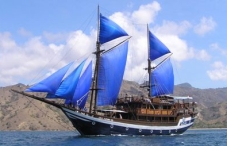
KLM Sea Safari VII
Sea Safari VII suffered a serious fire near Pulau Penga, Labuan Bajo, on 2 May 2024. This page preserves the earlier boat profile and reader discussion; it is no longer a current booking recommendation. Sea Safari VII does not appear in the operator’s
Toys Pakeh has some of the best coral around Nusa Penida and a varied topography, including sloping reef, plateau and wall sections. You are almost guaranteed to see different types of moray eels, colorful nudis, scorpion fish, lion fish, octopus and many more! The current here can be unpredictable though and changeable – always follow your guide and keep close to the reef! A beautiful site though with lots of life and brilliant corals.