
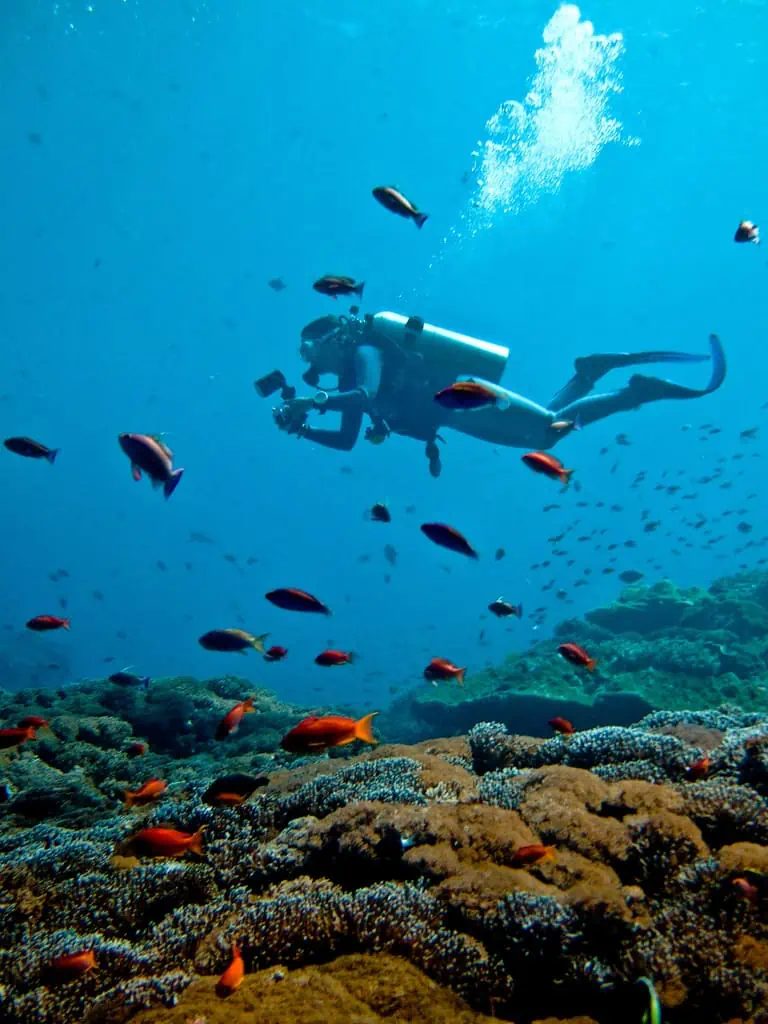

If you have dived in Nusa Penida / Nusa Lembongan before, please share your experiences: Dive spots you would recommend, which Dive Center you used, Fishes & Diving, Visibility, Currents, etc. Please post your comments in the section below, by doing so you will help fellow divers to plan their next trip

Nusa Penida and Nusa Lembongan offer manta encounters, seasonal sunfish and coral-reef drift dives southeast of Bali. A quiet pause beside a cleaning station can be every bit as exciting as the moment a huge silhouette appears in the blue. The reef between those encounters deserves attention too.
These islands reward a little flexibility. The southwest coast, sheltered bays and northern reefs do not share identical conditions. A good week here is built around suitable sites and enjoyable dives, rather than a checklist that has to happen whatever the sea is doing.
In this page you will find more detailed information about scuba diving in Nusa Penida / Nusa Lembongan.
Table of contents
Best Dive Review
| Site | Why divers come | What changes the plan |
|---|---|---|
| Manta Point | Cleaning stations and resident mantas. | Exposed coast; swell can prevent access. |
| Crystal Bay | Reef detail and seasonal sunfish. | Strong currents, including downcurrents, can affect the outer wall. |
| Toyapakeh | Coral formations, fish schools and macro life. | Timing matters on this current-dependent reef. |
| Mangrove Point | Coral slope off northern Lembongan. | Drift speed and surface conditions shape the outing. |
Crystal Bay’s inner bay and deeper wall are different propositions. A shallow training dive does not imply that a beginner can follow a sunfish into deep water. Manta Point also extends beyond the shallow cleaning area; “15 metres maximum” is not a reliable description of the whole site.
Crystal Bay local profile · Manta Point local profile · Toyapakeh local profile.
Four sites, three neighbouring islands
These geographic references help place the dives around Penida and Lembongan. They are not entry coordinates or an underwater navigation guide. Sites are chosen for the day’s conditions; the markers do not describe a fixed four-stop outing.
- Manta Point: Exposed southwest-coast site; access depends on swell and wind. Location reference
- Crystal Bay: A bay and deeper wall with very different profiles. Location reference
- Toyapakeh: Coral plateau and reef slope; current changes the dive. Location reference
- Mangrove Point: Reef off northern Lembongan, beside the mangrove coast. Location reference
How to dive Nusa Penida / Nusa Lembongan?
Staying on either island puts the dive day closer to your front door. Penida’s north coast has a wide choice of bases, while Lembongan has established operators running to the surrounding reefs. A Bali-based day trip can suit a short holiday, but its transfer time and inclusions differ from an island-based package.
A practical price comparison
Purple Dive Penida’s published prices, checked 9 November 2026, are IDR 1,950,000 for two boat dives or IDR 2,500,000 for three, per person. Rental gear, guiding, lunch, refreshments and government taxes are listed as included; a fun diver’s computer costs IDR 200,000 per day. The quoted maximum group is four divers.
That makes two dives with a rented computer IDR 2,150,000 before any separately applicable marine fee or transport. Its terms treat the marine protected area fee separately, so “taxes included” should not be read as confirmation of every access charge. Price list · Booking terms.
For comparison, Scuba Junkie’s packages explicitly exclude the island transfer, IDR 25,000 tourism levy and IDR 100,000 marine conservation fee per boat-diving day. These are its published exclusions, not a claim that every quote has the same structure. Package inclusions and exclusions.
Where to stay?
I usually use this website to book in advance my hotels in Nusa Penida / Nusa Lembongan as they usually have the lowest rates I find. I like it because it's free to cancel and change the dates.

Best time to dive in Nusa Penida / Nusa Lembongan
Mantas are seen year-round; sunfish are a seasonal possibility, broadly July–October. Neither a sighting nor access to a particular site is guaranteed. A few diving days leave more room for the right conditions than one tightly scheduled outing.
The warmer-water period is generally November–May, around 26–28°C (79–82°F) at many sites. June–October can bring water below 20°C (68°F). That cooler spell is part of the sunfish story, and a reason to discuss exposure protection before packing. Local seasonal guidance.

Top liveaboards in Nusa Penida / Nusa Lembongan according to divers reviews
Dive courses
Beginners can learn here through a properly supervised programme at suitable sites. That is different from joining an advanced drift or deep sunfish dive. Purple Dive’s Discover Scuba programme starts from age ten and uses a pool session followed by two ocean dives across two half-days. It is an introductory experience, not a certification.
The listed price is IDR 2,600,000; its Open Water course is IDR 6,850,000 including materials, certification and equipment. The operator requires swimming ability and chooses the ocean profile for the participant and conditions. Introductory programme · Course prices.
An arrival the afternoon before the first activity avoids trying to turn a delayed ferry into a rushed equipment fitting. The selected centre’s meeting time is more useful than a generic promise that an early boat from Bali will always connect.
Scuba Diving conditions
Crystal Bay can have strong and downward currents; Toyapakeh can range from a gentle drift to a much stronger flow. At Manta Point, swell and surge can matter more than the shallow depth of a cleaning station. Calm weather on land does not settle the underwater conditions.
A useful briefing explains the planned depth, drift and pickup arrangements, separation procedure and when the dive will be changed or cancelled. Comfort with buoyancy and the required procedures matters as much as the certification card. A diver who feels unsure can say so; a conservative alternative is a normal part of responsible trip planning.
Crystal Bay conditions · Toyapakeh conditions · Manta Point conditions.
Snorkelling in Nusa Penida / Nusa Lembongan
Snorkellers and non-diving companions
Mambo Dive Resort lists a two-site snorkel trip at IDR 600,000 per person, including mask, snorkel, fins, guide and lunch; a wetsuit adds IDR 35,000. Checked 9 November 2026. The page does not establish whether marine fees or hotel collection are included, so those need an explicit quote.
Supervision is a meaningful difference between products: Scuba Junkie states that its snorkelling is unguided in the water, with mandatory flotation equipment. A companion wanting an in-water guide should not assume that every place on a dive boat includes one. A boat-only seat, its price and permission to join must also be agreed with the chosen operator.
Guided snorkel option · Different snorkel supervision model. Land-based options are covered in the travel guide.
Fishes and Coral
Mantas and sunfish may get the headlines, but anemonefish, sea kraits and tiny nudibranchs give the reef its everyday character. These six images from Divezone’s Bali collection illustrate the variety; they are not promises of sightings on a particular dive.

Sunfish
A cooler-season possibility around Penida; the reef is still worth the dive when none appears.
Photo: Jihye Lee
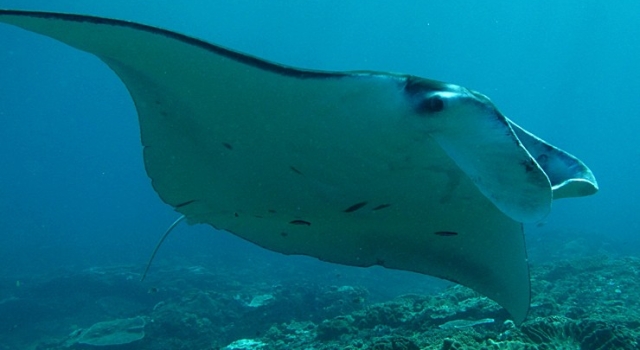
Manta
An encounter associated with Penida’s cleaning sites, when sea conditions allow access.
Photo: Jihye Lee

Frogfish
A master of camouflage that rewards slow looking on macro dives.
Photo: Jihye Lee

Anemonefish
Small reef residents with plenty of character close to their host anemone.
Photo: Jihye Lee

Nudibranch
A colourful reminder that a small subject can fill a whole dive’s conversation.
Photo: Jihye Lee

Sea snake
A marine reptile photographed in Bali; space to move freely makes the encounter better for both visitor and animal.
Photo: Jihye Lee
Sharing the water respectfully
The marine-park code-of-conduct film linked by Purple Dive Penida. Wildlife encounters work best without touching, chasing, feeding or crowding animals.
Diving Safety
If you are planning an upcoming dive trip or travelling to Nusa Penida / Nusa Lembongan, it is a really good idea to invest in travel insurance for scuba diving, because you never know what could happen and when you might need it (because accidents do happen!). I recommend this diving insurance as they offer worldwide coverage and focus on providing scuba divers a quality insurance and medical assistance service.
Penida and Lembongan diving questions
Can a beginner dive around these islands?
Yes, in a supervised introductory or certification programme at sites suitable for that day. This does not make every drift, wall or sunfish profile suitable for a beginner.
Will a manta trip definitely visit Manta Point?
No. Swell and wind can close access, and the operator may substitute another site. Wildlife sightings are never guaranteed.
Is Crystal Bay always an easy bay dive?
No. The inner bay and outer wall differ, and strong currents can make access unsuitable.
Is all the water tropical-warm?
No. Upwelling can bring very cold water during the cooler season; exposure protection is an important part of preparation.
Do quoted dive prices include the marine fee?
Inclusions vary. Equipment, computer rental, island transfers and marine fees should be compared separately.
Original guide by Julien; refreshed 9 November 2026. Historical main photograph: original photographer. Reader comments remain in their dated context.
Photos Nusa Penida / Nusa Lembongan



Travel Guide
Now that you know all about the underwater world, you might want to start planning your scuba holiday! Check out our Nusa Penida / Nusa Lembongan Travel Review for information about how to get there, activities and excursions, where to stay, and more.

Diving Reviews for this region
Dive spots reviews in Nusa Penida / Nusa Lembongan
Liveaboard Reviews in Nusa Penida / Nusa Lembongan
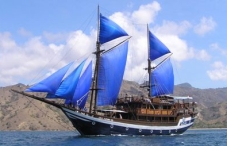
KLM Sea Safari VII
Sea Safari VII suffered a serious fire near Pulau Penga, Labuan Bajo, on 2 May 2024. This page preserves the earlier boat profile and reader discussion; it is no longer a current booking recommendation. Sea Safari VII does not appear in the operator’s
This is a planning question. We are a brother and sister each with 3-4 prior dives over a long period, now going to both Gili Trawangan and to Padang Bai. On the basis of a friend’s experience that Gili was delightful but the diving poor there, we are planning on diving more in Padang Bai. A guide we will hire then suggested just Amed and Lembogan, rather than diving out of Padang Bai. Do you have any comparisons to offer? Thanks very much.
Did my 30m deep cert with Bali dive academy on Nusa Lembongan. Did a drift dive on Mangrove point. The coral is in much better condition than around the Lombok islands. the whole island is paradice with many dive options as well as great food and cheap beers
I think the safety warning in the above article is very misleading. Professionallying run dive shops on Lembongan have been teaching beginners to dive for years. With the correct planning there is no reason why beginners can’t enjoy the stunning reefs and fish life on offer. Being so close to the diving here we are able to be flexible with our dive times unlike the dive shops from Bali. Choosing a good well run shop is important.
Crystal bay’s coral wall and other dive sites in Nusa Penida is substantially damaged by divers grabbing wall with hand.
You can go countercurrent easily with your trunk getting near to floor or wall, doing gentles kicks(preferably frog kick with trim)instead of touching, grabbing it.
Nusa Penida is a perfect drift dive site. There are only few places you can drift for 45min.
However I guess it is a most crowded of sites in Bali. So in next trip to Bali I’m about to exclude Nusa Penida.
I di’ndt know where to find this info then kaboom it was here.
Just returned from a trip to Bali. Tried some diving at the recommended Nusa Penida. The drift was so strong that the dive was not enjoyable. It also causes everything to be green and dirty in color as it picks up all the silt in the water. We didn’t even do the second dive because of the motion sickness of the drift from the first. I was able ot see some clown fish and star fish, but we drifted so fast, that you didn’t have time to enjoy anything let alone get good pictures
I’ve been diving Nusa Lembongan twice now and definitely going back. There were heaps of Manta rays, amazing coral, lots of fish, very good viz and even a pod of dolphins.
I was diving with Legend Diving Lembongan who were friendly, knowledgeable and above all provided a safe and comfortable dive experience.
When do you think the best time for snorkeling (not diving) around Penida and Lembongan is? I mean the time when the sea is calm and no strong current.
Big thanks!!
There are so many adventures courses provided and relaxation in scuba diving.Nice Post
I so wanted to do this and still do. Had a couple of taster sessions in pools in UK, then booked a PADI course in Dahab about 5 years ago. Completed all the confined water stuff but as soon as instructor took me down for 1st open water dive panic set in. I settle for a bot of snorkelling now, but I can still dream!
Hi Diana, I’m sorry to read this about the panic while diving. It’s indeed something that happens and if you’re not ready to dive again it’s 100% fine! Plus, the world is big and destinations with crystal clear waters are many so you can get almost as much as a dive by staying on the surface! Wishing you the best snorkeling explorations in the future
There are so many advantage provided for scuba diving and relaxation
Hi, I will be doing my Padi course in Bali with my partner and were looking at Nusa. She has never dived before and could be apprehensive about the current being to strong for her as a beginner? I dont want it to scare her off. So im looking to hear from anyone who has experience of the area please. Or would we be best to do it on the Gilis where im told its calmer? Or would there be any other recommendations?
Thank you in advance
Andy
Hi Andy!
Quickly my thoughts are that there are better places to learn to dive at first. The water in Nusa is perhaps colder than other places and there are currents, even “sweeping” ones as mentioned above. But, on the other hand, a good dive center knows what it’s doing and will go to the proper sites for an Open Water training so I’m sure it would be totally fine! Your best clue will be to look at some dive centers website and contact the ones you’re interested in! Remember, in term of diving, the priority should be the quality of the training and not only the price
Plus, as a personal opinion, snorkeling is fine in the Gilis, meaning that I found nothing over exiting in scuba there. But, this also means it would be great and easy for a beginner
Best bubbles, always!
Also I should add for the question above. We will be doing it mid March time.
Thank you
Nusa Penida is one of the best dive sites in Indonesia. If you want to see big stuff, this is a fantastic (and relatively easy to reach) locations. I have had close encounters with Mantas, Molas, turtles and sharks here. Yes, the currents need to be respected, but a good dive operation like World Diving creates the daily schedule based on the tide, currents and where the fish are. Simply put, this is a great place to dive and in the same league as the Komodos and Bunaken.
Hello!
We are coming to Bali on September and we would like to know how much does it cost for Scuba Diving at Nusa Penida, for 2 persons?
We would like to do this activity on September 13 2022 in the morning (one half day). Is it possible ? How long the activity take?
Thank you! Tania