
Philippines liveaboard planning
Offshore reefs or an island-to-island dive safari?
A Philippines liveaboard is the way to reach remote Tubbataha, but that is only one kind of cruise here. The Visayas bring reef walls, small marine life and Malapascua shark encounters into the same holiday; Coron and Apo Reef combine wreck diving with a very different reef system. The best starting point is the route, followed by the boat and the complete cost.
Affiliate link: Divezone may earn a commission if you book.
Which liveaboard route suits you?
| Route | Main appeal | Planning difference |
|---|---|---|
| Tubbataha | Remote reefs, walls and open-water encounters | Seasonal offshore cruises, generally March–June, commonly from Puerto Princesa; experience requirements matter |
| Visayas and Malapascua | Varied reef and macro diving, with thresher-focused trips in the north | Cebu/Mactan and Dauin departures are different; boat and itinerary determine the islands visited |
| Coron and Apo Reef | Wartime wrecks and an offshore reef system | Depth, overhead environments and longer transfers can change suitability; the exact joining port matters |
| Transition voyages | A longer journey between regions | Often different embarkation and disembarkation ports, with more sailing and separate flight arrangements |
Tubbataha: a dedicated offshore trip
The park has two atolls, North Atoll and South Atoll, and the smaller Jessie Beazley Reef. Each site has its own personality, with some offering a slope before dropping off while others are sheer walls. Strong, changing currents are possible. A liveaboard allows several days around this remote reef system, far beyond the practical scope of a normal day boat.
Six- and seven-night programmes are common among the boats checked here. They are not automatically six or seven full dive days: crossings, embarkation and the final no-fly interval reduce the time available. Philippine Siren, for example, publishes up to 19 dives on its six-night programme, with no diving on embarkation day and no night dives in the park.
Visayas: variety between islands
A Visayas cruise can link reef walls with black-sand macro sites and island scenery. The northern routes differ from Southern Visayas circuits around areas such as Cabilao, Balicasag, Dauin and Apo Island. Apo Island is not Apo Reef: the latter lies off Mindoro, in another part of the country.
Malapascua remains a draw for thresher sharks, but the older description of Monad Shoal as the one daily shark site needs updating. Local operators now identify Kimud as the principal thresher destination. The selected departure’s programme is more useful than an old generic list of stops, and no wildlife encounter is guaranteed.
Coron, Apo Reef and longer passages
Coron’s wreck diving and Apo Reef offer a compelling combination, though not every wreck is shallow or suitable for every diver. Visiting an exterior and entering a wreck are different activities requiring different preparation. Resolute currently lists six-night Apo Reef–Coron departures from Anilao; a flight to Coron is therefore not automatically the right way to join that cruise.
Two documented liveaboard route examples
These programmes show why the departure port matters. Markers locate towns, islands and reef areas, not jetties or dive entries. Dashed connections show the ordered stops, not navigational tracks. Conditions and the departure programme can change the stops and order.
Tubbataha · Seadoors example · ordered stops
Apo Reef–Coron · Resolute example · ordered stops
Route sources: Seadoors six-night Tubbataha programme, 15 December 2023 and Resolute’s 2026–2027 Apo Reef–Coron programme, checked 16 November 2026. Regional reference coordinates: GeoNames; Tubbataha reef reference points: published park monitoring locations. These examples do not represent every Philippines itinerary.
Philippines boat reviews: where to start
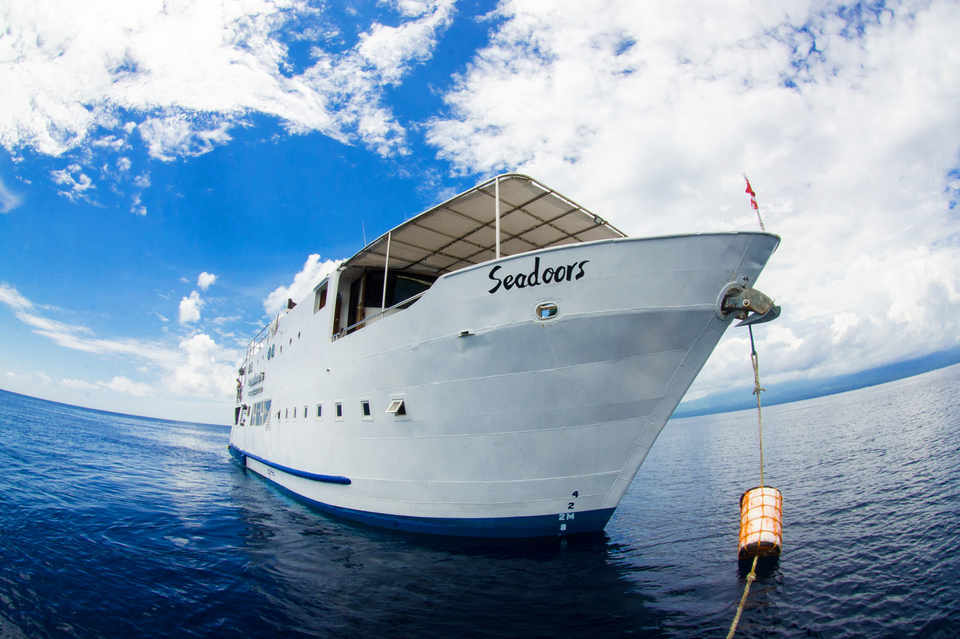 16 guests · eight cabins
Seadoors
A smaller-group boat with Standard and Deluxe cabins, a sociable dining area and both Visayas and seasonal Tubbataha programmes. The reviewed cabin guide explains the different decks and the charges beyond the headline fare.
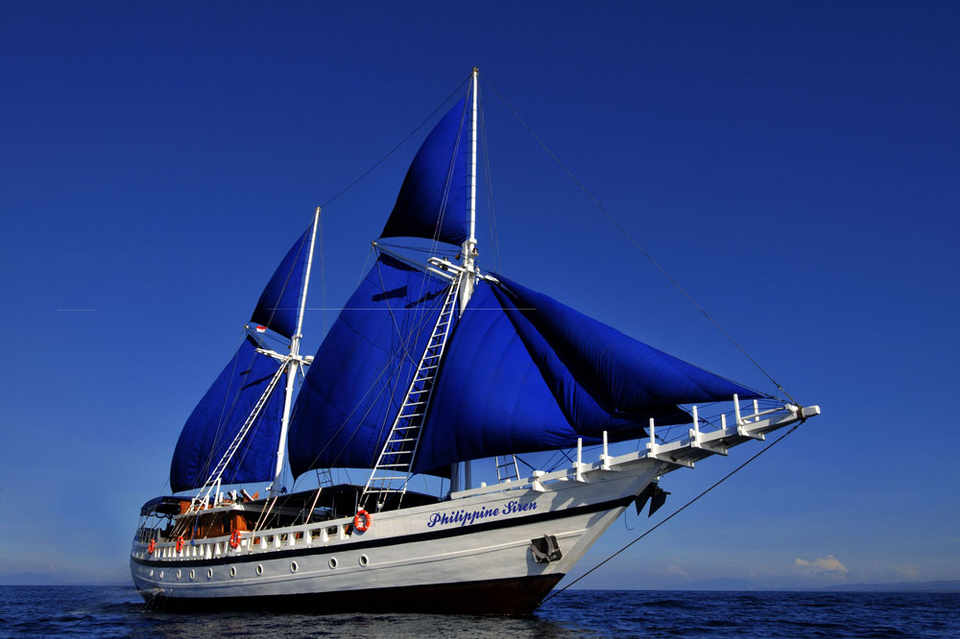 16 guests · twin/double choices
Philippine Siren
A wooden vessel with a shaded dive deck and outdoor dining. The choice between fixed twins, fixed doubles and convertible cabins is useful for couples and friends. Nitrox and rental equipment are extras.
Infiniti
Atlantis currently markets Infiniti for Tubbataha and Visayas routes. Its 11 cabins accommodate up to 25 guests, with twin, convertible and triple arrangements. The actual departure and cabin category deserve attention when comparing it with a 16-guest boat.
Resolute
An eight-cabin, 16-guest alternative with current Apo Reef–Coron sailings from Anilao, as well as seasonal regional programmes. Its port and route can be a more useful differentiator than the vessel’s age.
Seadoors and Philippine Siren images: LiveAboard.com vessel galleries; selected November 2026, capture dates not supplied.
Other Divezone boat profiles and older names
The directory also includes Stella Maris Explorer, Solitude One and PalauSport. Some boats move between countries or have several regional programmes, so the dated Philippines sailing matters more than a destination tag.
Atlantis now uses the name Atlantis Adventurer in its current material where older Divezone readers will recognise Atlantis Azores. Its current fleet also includes Infiniti. Old names in reviews should be read alongside today’s booking documents.
Older profiles needing direct confirmation of current sailings
Discovery Palawan, Discovery Adventure, Eco Explorer, Vasco, Banka Ona and Rags II retain historical profiles on Divezone. A current departure was not established for these names in this guide’s checks. This is not proof of retirement; the old reviews are not evidence of a bookable trip today.
When to take a Philippines liveaboard
Tubbataha’s offshore diving window is generally March to June, with the actual departure calendar setting the available dates. Outside that window, other parts of the Philippines remain possible, but a countrywide promise of calm seas would be misleading. Rainfall, wind exposure and sea state vary between islands.
The Visayas support sailings in different parts of the year. Matching the cruise to the region is more useful than treating the whole archipelago as one wet-season or dry-season destination. Storms can affect transfers and routing even when the weather at your departure airport looks fine. The Philippines diving guide provides the broader regional picture.
Experience requirements belong to the boat and route
Philippine Siren’s Tubbataha programme requires Advanced Open Water or equivalent, at least 50 logged dives and comfort in currents. Its seven-night Southern Visayas programme lists Open Water or equivalent and at least 25 logged dives. Atlantis specifies Advanced certification and at least 25 logged dives for its liveaboard charters. These are examples of different operator rules, not one national standard.
Recent diving, buoyancy, tender entries and recoveries matter alongside the number in a logbook. A course offered aboard on one route does not mean it is available on an offshore departure: Siren explicitly does not offer Advanced Open Water certification during Tubbataha cruises. Insurance and medical-document requirements also belong in the booking conversation.
What does a Philippines liveaboard cost?
Remember: budget does not always mean poor quality. A shorter or less remote itinerary may cost less without providing the same trip. The comparison is most useful when the route, number of nights, cabin and occupancy are held constant.
| Boat and departure | Nights | Cabin/fare basis | Reference |
|---|---|---|---|
| Seadoors · Southern Visayas, 5–11 December 2026 | 6 | Standard cabin, sharing | €2,290 |
| Seadoors · same departure | 6 | Deluxe cabin, sharing | €2,362 |
| Philippine Siren · Tubbataha, 23–29 March 2027 | 6 | Shared accommodation; cabin allocation subject to quote | US$4,680 |
These examples involve different routes and currencies and are not a cheapest-to-best ranking. A fare shown for a departure does not reserve a place. Single occupancy, a specific bed arrangement and last-minute offers may change the quote.
The useful total is more than the cabin fare
Compulsory park, port, fuel and service charges are the first additions to check. Philippine Siren lists a US$120 combined marine/park/port charge for its six-night Tubbataha itinerary. That is different from the park authority’s standalone conservation fee of PHP5,000 per visitor; the two amounts should not simply be added together without checking what the operator collects.
Nitrox, equipment rental, flights, baggage, arrival hotels, transfers and insurance can materially change the holiday budget. An advertised discount is worth comparing against the final total for the same cabin and route. A compulsory service charge is also different from a discretionary tip.
Airports, ports and the joining day
Puerto Princesa (PPS) is the usual gateway for the Tubbataha trips discussed here. Mactan–Cebu (CEB) is relevant to many Visayas departures, while Dauin-based cruises involve travel to Negros and the Dumaguete area. Anilao-based itineraries have a different overland joining arrangement again. The boat name alone does not identify the correct airport.
An arrival night before embarkation gives breathing room for delayed flights and baggage. One-way cruises need the disembarkation port checked before flights are bought. The final dive and onward flight also need planning together: Philippine Siren recommends at least 24 hours before flying after its final dive. Diving medicine guidance and the actual operator timetable should inform the booking.
Travelling with a non-diver?
Acceptance aboard, the price and the activities offered are three separate questions. Master Liveaboards welcomes non-diving partners, but its Tubbataha information says it cannot organise swimming or snorkelling there and does not permit island visits. The Southern Visayas programme is described as snorkeller friendly. Those are very different holidays for someone staying out of scuba gear.
Seadoors is marketed as non-diver friendly, but a route-specific programme and fare still need confirmation. No general Philippines non-diver discount has been verified. A beach resort with diving day trips may suit a mixed group better than a remote cruise; the non-diver should have a trip to look forward to too.
Cabin and onboard practicalities
A twin bed, a double bed and a convertible cabin are not interchangeable when a boat is nearly full. Shared berths may carry a gender restriction; sole occupancy requires a separate price. Dietary needs, rental sizes and any camera-equipment requirements are easier to resolve while choices remain available.
The equipment list should distinguish what is provided from what is required. Nitrox is not universally included. Charging arrangements, internet access and payment methods vary by vessel; an internet listing does not promise streaming quality in the middle of the Sulu Sea. Onboard documents and essential confirmations are useful offline.
Philippines liveaboard questions
Which route really needs a liveaboard?
Tubbataha is the clearest example: its remote offshore location makes it a dedicated boat expedition. Many Visayas and Coron sites also have land-based diving options.
Is Tubbataha suitable for beginners?
The remote setting and variable currents make experience important. Philippine Siren requires Advanced Open Water or equivalent, 50 logged dives and comfort in currents; other operators set their own rules.
Are all cruises one week long?
No. Six- and seven-night trips are common examples, but longer regional and transition cruises also operate. Nights aboard and actual diving days are different measures.
Does Apo Island mean Apo Reef?
No. Apo Island is near Negros in the Visayas. Apo Reef is a separate reef system off Mindoro, often combined with Coron itineraries.
When is Tubbataha open for dive cruises?
The usual diving window is March to June. Actual dates depend on the permitted season, operator calendar and sea conditions.
Are night dives included?
Not universally. Tubbataha programmes prohibit night diving; sunset dives are different. Other regional routes may offer night dives, depending on the operator and conditions.
Is Nitrox included in the cruise fare?
It depends on the boat and offer. Philippine Siren lists Nitrox as a paid extra. The written quote should identify the package and certification requirements.
How do I compare prices fairly?
The useful comparison keeps route, nights, cabin and occupancy consistent, then adds compulsory charges and likely extras. Prices in different currencies and for different itineraries do not form a meaningful ranking.
Is the park fee the whole compulsory supplement?
No. Operators may collect combined park and port fees, plus fuel or service charges. The park authority conservation tariff is only one component; it should not be counted twice.
Which airport should I use?
It depends on the embarkation port. Puerto Princesa serves the Tubbataha examples here; Visayas cruises may join around Mactan or Dauin. Anilao and one-way sailings need their own transfer plan.
Can I fly home as soon as the boat returns?
The final dive time, the no-fly interval and the disembarkation schedule all matter. Philippine Siren recommends at least 24 hours after the final dive; an early-morning flight may also be incompatible with its port arrangements.
Can my non-diving partner join?
Some operators welcome non-divers, but that does not guarantee a discount or daily snorkelling. Siren explicitly does not organise swimming or snorkelling on its Tubbataha itinerary. The route matters as much as acceptance aboard.
Can I book a cabin alone?
A shared berth may be available, sometimes with a gender restriction. A private cabin is a different quote and may involve a single supplement. Neither arrangement should be assumed from a per-person fare.
Are shark encounters guaranteed?
No. A route can be chosen for its habitats and known opportunities, but marine life is wild and conditions change. Old sightings are not a forecast for a particular sailing.
Are last-minute offers always good value?
A discount can help, but flight costs, cabin allocation and compulsory extras still matter. The saving should be checked against the total for a trip that actually fits your experience and dates.
How should I read old boat reviews?
The dates are part of the evidence. A useful historical account can describe a previous crew, configuration or name. Current cabin details and joining documents should settle the booking questions.
A route that fits the holiday
The strongest shortlist starts with where you want to dive, then checks whether the boat, cabin and complete budget fit. The individual reviews above help with those next decisions.
Browse Philippines liveaboard departures
Affiliate link: Divezone may earn a commission if you book.
Editorial checks: 16 November 2026. Sources include Tubbataha Management Office, park permits and fees, Master Liveaboards, Seadoors departures and Atlantis joining information. Original reader comments retain their dates below.
Hi, I would just like to know why all the liveaboards vessels in the Philippines seem to be quite small? Is it due to traveling through narrow channels/passageways or is it more economical?
Thanks for sharing this informative post. Tubbataha reef is the most natural palace where you can see the most amazing creatures under the sea water. If you are daring and want to go deep inside the sea and see these creatures with your own eyes, we at Tubbataha Diving offer the whole tour packages for upcoming events that start from March 19th.
Apo Reef and Coron Wrecks Liveaboard Diving Adventures
diveunda
Apo Reef diving through diveUNDA
APO REEF, in the the Philippines, is the largest reef system in Asia and second largest in the world. As good as Tubbataha, if not better, because it is not crowded and is open all year. There is a great budget liveaboard that goes from Coron Palawan. Their website is diveUNDA.COM and you can book online at bookeo.
Hello, I am working for a liveaboard based out of Puerto Galera in the Philippines, We are called the Caribbean Tigress and we would like to know if it’s possible to advertise on your website.
Many Thanks ,
Conan Fagan.