 Destinations
Bahamas liveaboard planning guide · Reviewed 5 October 2026
Your Bahamas diving journey starts here
You are thinking of a liveaboard in the Bahamas? We’ve gathered all the information in one place for you. Picture a week of reefs, blue water and unhurried evenings on deck—then choose the boat, route and cabin that make that picture work for you.
Start with our Bahamas liveaboard comparison for side-by-side cabins and costs. This guide brings together the diving regions, seasons, requirements and practical planning, with links to our individual boat reviews.
Disclosure: Divezone may earn a commission from affiliate bookings. This is a researched editorial update, not a new firsthand inspection of each boat. Photographs and historical vessel details are dated or qualified where possible.
Plan the trip that fits you
A Bahamas liveaboard can be a sociable sailing trip, an en-suite dive cruise or a specialist wildlife expedition. These are not interchangeable products. Decide whether your priority is a varied Exumas week, a specific shark area, a small group or a particular level of cabin comfort.
| Your next question | Where to start |
|---|---|
| Which boat and cabin? | Boat, cabin and cost comparison |
| Which sites and marine life? | Bahamas diving guide |
| How do I get there and extend my stay? | Bahamas travel guide |
| How do I keep costs down? | Budget liveaboard guide |
| Which comforts justify an upgrade? | Cabin comfort and luxury guide |
Before a deposit, obtain the operator’s approval of your experience, the exact vessel and route, a cabin allocation and a quote with all compulsory fees. Then book your flights using the joining instructions.
Bahamas liveaboard reviews
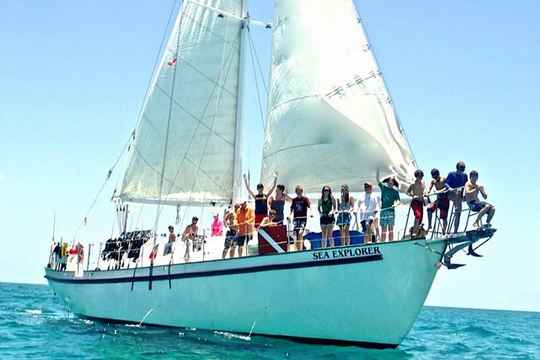
Photos: current partner listings for Aqua Cat and Sea Explorer; other images are from the Divezone archive. Capture dates are unknown.
 Shared-bunk sailing
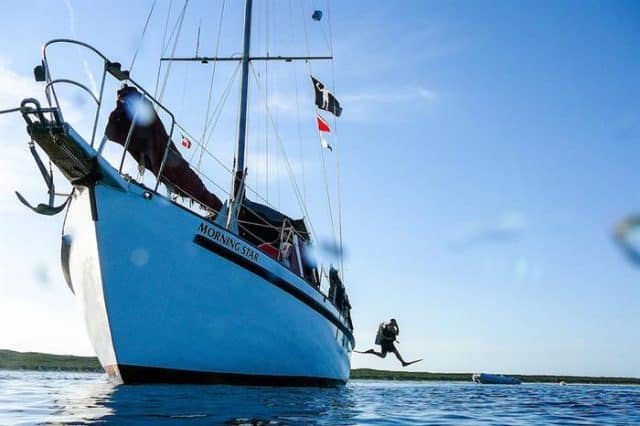
Blackbeard’s Morning Star
shared bunks, simple living and a sociable six-night Nassau programme. A useful starting point for a lower cruise budget.
Shared-bunk sailing
Blackbeard’s Sea Explorer
sister-vessel alternative with communal accommodation. Confirm the actual vessel and berth allocation.
 En-suite comfort
Aqua Cat
a catamaran with en-suite cabins and generous communal areas. Compare ocean-view double occupancy with the lower-priced skylight/bunk cabin.
 Sailing from Miami
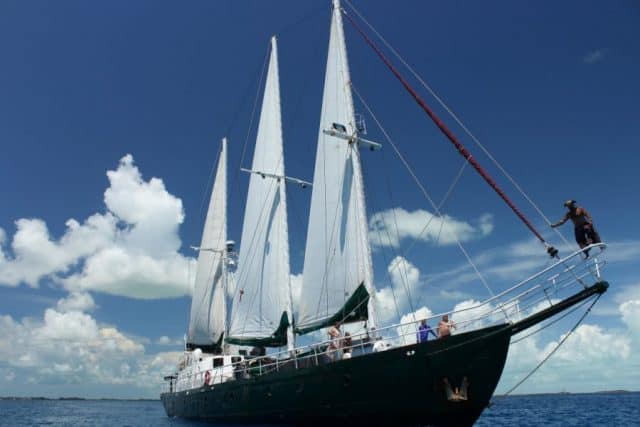
Juliet Sailing & Diving
a characterful schooner with Bahamas departures from Miami. Standard and en-suite rates differ; Nitrox certification is required.
 Specialist · quote required
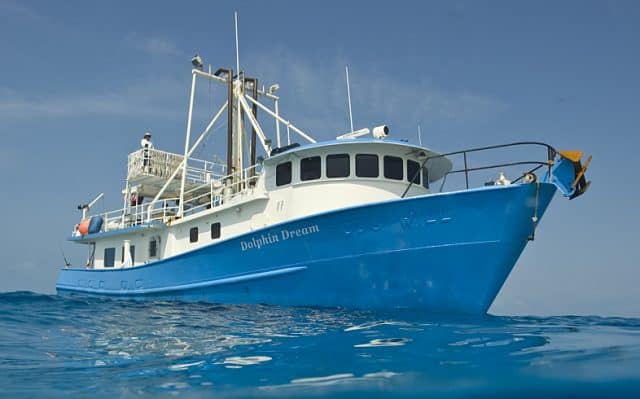
Dolphin Dream
specialist dolphin or shark programmes. Establish whether the trip is snorkeling or scuba, and obtain current dates and a written quote.
 Specialist · quote required
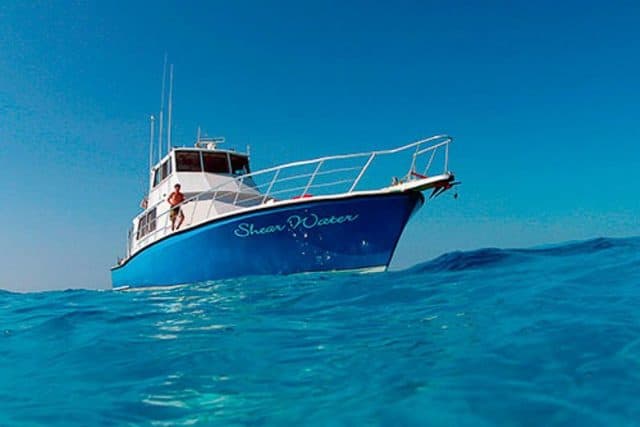
Shear Water
small-group shark expeditions associated with Florida departures. Confirm the route, current availability and charter price.
 Historical · sailing unconfirmed
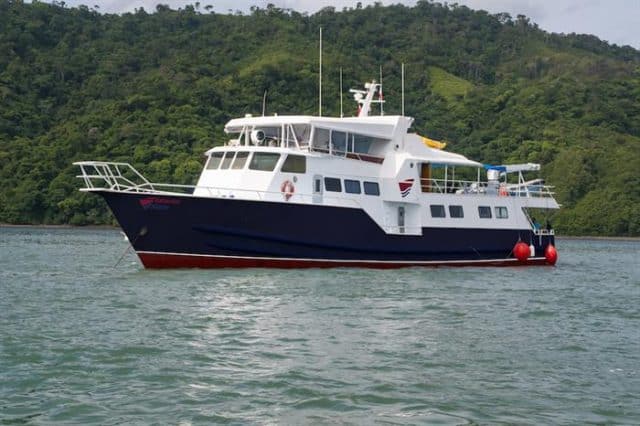
Bahamas Master
historical profile retained; a current operator-confirmed future sailing and price remain unverified for this update.
Also compare Bahamas Aggressor II and Cat Ppalu. Aggressor II has ten en-suite cabins for 20 guests; Cat Ppalu has six private cabins for 12 guests with shared bathrooms and no Nitrox. Both are included in the full comparison, with primary-source links.
Aggressor name change: the original Bahamas Aggressor moved to Belize as Belize Aggressor V in 2026 according to the operator announcement. Its old review and photographs must not be confused with Bahamas Aggressor II.
Choose the region before the vessel
| Region | Trip character | What to confirm |
|---|---|---|
| Nassau, Exumas and Eleuthera | A varied mix of reefs, walls, wrecks and some drift diving | Actual route, daily sites and appropriate experience |
| Grand Bahama / Tiger Beach | Specialist shark encounters in the northern Bahamas | A named Tiger Beach programme, entry port and shark procedures |
| Bimini | Seasonal great hammerhead diving and separate dolphin programmes | Season, activity type and whether the trip is scuba or snorkeling |
| Andros and other islands | Reefs, walls and specialised blue-hole interests | Specific operator access; ordinary cruises do not visit every island |
The Bahamas’ reefs, historic wrecks, blue holes and walls offer very different dive experiences. Nassau’s Lost Blue Hole and Bond wreck sites, the Exuma Cays and the northern shark areas belong to different day plans or routes. Read the day-by-day itinerary instead of treating a destination list as a promise.
Seven nights aboard are not seven full diving days. Boarding, crossings, the final port night and the no-fly interval affect your time underwater. Published dive counts are maxima or plans and remain subject to conditions.
When to go
Diving operates through the year, but the right season depends on what you want to see and how you feel about cooler water, wind or storm disruption. Bimini great hammerhead programmes often focus on December to April. A wildlife season improves planning; it cannot promise a sighting.
- Winter and early spring: cooler water and cold fronts. Bring suitable thermal protection and expect occasional route changes.
- Late spring and summer: generally warmer water; plan for sun and heat as well as weather changes.
- June–November: Atlantic hurricane season. Check the cancellation and interruption policy and what your insurance covers.
Juliet’s indicative Bahamas ranges run from about 22–25°C in January–March to 27–30°C in July–September. These are operator planning ranges, not a forecast for every site. Visibility varies with weather, current and location; avoid choosing a trip on a fixed visibility guarantee.
Diving experience and preparation
Tell the operator your certification, logged dives, most recent trip and experience with current, boat entries and repetitive diving. Ask which planned sites fit your level and whether a refresher should be completed beforehand. Good buoyancy and controlled ascents matter more than simply meeting a card requirement.
Juliet currently requires Nitrox certification. Other vessels have their own gas options and training rules. Specialist shark trips may impose additional age, experience and equipment conditions. Do not transfer one operator’s rules to another boat.
Ask for the emergency plan and required dive-accident cover, including evacuation. Check that the policy covers the planned activity and depth. Cavern and cave penetration are separate disciplines; stay in open water unless appropriately trained and equipped with a suitable specialist operator.
Build the full holiday budget
Our comparison uses dated USD rates per person at stated occupancy. Useful 2026 references include a six-night Blackbeard’s shared-bunk subtotal of $1,405 including published mandatory fees, and a seven-night Aqua Cat ocean-view double subtotal of $3,790 before optional Nitrox and travel. Juliet’s standard six-night Bahamas fare is $2,100, with the current rates including the port charge and Nitrox.
These different products should not be ranked on price alone. Use the matched budget table for durations, cabin assumptions, known fees and unresolved extras. For Bahamas Aggressor II’s seven-night Exumas reference, add $299 port/park fees: the Twin / Deluxe / Balcony subtotals are $3,794 / $3,994 / $4,394, before the optional $100 Nitrox package, travel and other extras. See the sourced cabin budget. Unverified specialist fares are not used as current offers.
- Compulsory charges: taxes, port fees, fuel or other departure-specific charges.
- Diving extras: Nitrox, equipment rental, courses and any required insurance.
- Travel: flights, baggage, hotel buffers and transfers.
- Personal spending: gratuities, meals ashore and optional activities.
Read the cancellation terms before paying. A weather credit is not the same as a refund, and a discounted berth may carry different conditions. Compare the final written invoice for the exact cabin and dates.
Flights, entry and island extensions
- Confirm both ports. Nassau (NAS) is the starting point for Aqua Cat and Blackbeard’s; other itineraries may use Grand Bahama or Florida. Juliet boards in Miami.
- Add a buffer. Connections, luggage and crossings can run late. A pre-cruise night makes the start of the holiday less rushed.
- Check entry and transit rules. Requirements depend on nationality, residence and route. A Florida departure adds US entry considerations; use official Bahamas and relevant consular information.
- Plan the last dive and flight. DAN recommends at least 18 hours after repetitive or multiday no-decompression diving for divers without symptoms, with longer intervals reducing risk. Follow your computer, operator and current guidance.
Add island days for beaches, local food and non-diving companions. Choose the island first and allow realistic travel time between islands; a domestic connection is not always a simple extension of your international flight. Our travel guide helps put the pieces together.
What to pack and ask about
Bring certification, dive log, insurance details and emergency contacts in offline copies. Pack a familiar mask and computer, thermal protection for the season, and any signaling equipment required by the operator. Confirm rental sizes and cylinder/valve arrangements ahead of time.
Soft luggage is helpful on smaller sailing boats. Add sun protection, a reusable water bottle, a windproof layer and comfortable shore footwear. Ask about dietary needs, charging sockets, internet, onboard payment methods and cash-only extras. Keep alcohol for after the diving day.
Bahamas liveaboard FAQ
1. What is the best Bahamas liveaboard?
The best choice depends on your route, sleeping arrangements and full budget. Blackbeard’s suits communal living, Aqua Cat offers en-suite comfort, and Juliet adds a Miami sailing departure. Start with the dedicated comparison and choose real departures for your dates.
2. Do I need a liveaboard to dive in the Bahamas?
No. Island-based dive centres offer day trips, courses and local shark dives. A liveaboard makes sense when you want several days at sea and a wider route; a hotel holiday gives more flexibility for land activities.
3. Which trips visit Tiger Beach?
Choose a named northern Bahamas or Tiger Beach itinerary. Do not assume a standard Nassau–Exumas cruise goes there. Weather and the captain’s assessment determine the actual sites.
4. Where can I see great hammerheads?
Bimini is a major focus for great hammerhead trips, particularly December to April. Select the correct seasonal programme; a Bahamas destination label alone does not establish a Bimini visit or guarantee an encounter.
5. Are shark encounters guaranteed?
No. These are wild animals. Even at well-known sites, sightings depend on conditions and animal behaviour. Follow briefings, keep your position and never chase or touch wildlife.
6. Can a beginner join a Bahamas liveaboard?
Some reef itineraries may suit newer certified divers with operator approval. Specialist shark trips, current, deeper walls and night dives require appropriate skills. Send your certification and recent dive history before paying.
7. How many logged dives are required?
There is no single Bahamas-wide minimum. Requirements differ by operator and charter. Ask for the rules for the exact departure and explain your experience in the expected conditions.
8. Is Nitrox required or included?
Juliet’s current policy requires Nitrox certification and includes Nitrox in its published 2026–2027 fare. Aqua Cat lists it as an extra. On other vessels, confirm availability, certification and cost rather than assuming a common rule.
9. What does a Bahamas liveaboard cost?
Our published references range from a $1,405 six-night Blackbeard’s shared-bunk cruise subtotal to $3,790 for seven nights on Aqua Cat in an ocean-view double cabin, before optional extras and travel. These are different products, not a matched quality ranking.
10. Are taxes and port fees included?
Sometimes. The comparison separates fares from known mandatory charges. Obtain a written total for your departure, including any tax, port fee, fuel charge and payment fee.
11. Can I have a private bathroom?
Yes, depending on boat and cabin. Aqua Cat has en-suite cabins and Juliet offers an en-suite category. Blackbeard’s uses shared facilities. Confirm the exact cabin and bathroom access on the booking.
12. What should a solo diver check?
Ask whether the price is for a shared berth, how cabin matching works and what happens if no roommate is found. Compare the supplement for sole use and specify your preferred bed arrangement.
13. Which airport should I book?
Nassau (NAS) is used for Aqua Cat and Blackbeard’s. Other itineraries may use Grand Bahama or depart from Florida. Juliet’s Bahamas programme starts in Miami. Confirm both ends of your particular trip before buying flights.
14. Should I arrive a day early?
A buffer is sensible, especially with international connections, dive luggage or a sea crossing. Use the operator’s joining times and consider a hotel night before boarding.
15. When can I fly after diving?
DAN recommends at least 18 hours after repetitive or multiday no-decompression diving for divers without symptoms; longer intervals reduce risk. Decompression diving requires a longer interval. Follow your operator, dive computer and current medical guidance.
16. When is hurricane season?
The Atlantic hurricane season runs from 1 June to 30 November. Summer trips can still operate, but read weather-change and cancellation terms, arrange suitable insurance and keep travel plans flexible.
17. What wetsuit should I bring?
Choose for the route, season, repetitive diving and your own cold tolerance. Winter water can feel cool and surface wind matters; summer is usually warmer. Ask for recent conditions and the operator’s recommended protection.
18. Can non-divers or snorkelers join?
Some cruises accept them, but activities and supervision vary. Ask what they can actually do while the divers are underwater and whether shore visits are planned. A scuba shark expedition is not automatically a suitable snorkeling holiday.
19. Is the original Bahamas Aggressor still a Bahamas option?
Aggressor announced its move to Belize as Belize Aggressor V in 2026. Bahamas Aggressor II is a separate vessel. Use the correct listing, photographs and joining instructions.
20. Why is Bahamas Master shown with unconfirmed status?
A current operator-confirmed future departure and fare were not established for this update. Historical information is retained, with its limits clearly stated. Unconfirmed availability does not prove that the vessel has retired.
21. What insurance and documents do I need?
Check passport, visa and transit requirements for your nationality and residence, including US entry if departing Florida. Carry certification, logbook and insurance details. Confirm that dive-accident cover includes your activity and evacuation needs.
22. Can I enter blue holes or caves on a normal dive qualification?
Open-water diving near a blue hole is different from entering an overhead environment. Cave or cavern penetration needs the relevant training, equipment and a qualified specialist operator; do not follow another diver beyond your limits.
Sources and editorial checks
Reviewed 5 October 2026 using All Star Aqua Cat, Blackbeard’s, Cat Ppalu, Juliet rates and travel instructions, Aggressor II rates, Aggressor announcements, official Bahamas entry information, Bahamas wildlife guidance, NOAA hurricane climatology and DAN flying-after-diving guidance. Vessel-specific limitations are described in each profile.
Ready for the next step? Compare the boats and cabins, then check departures for your dates.


