

Daedalus: lighthouse, walls and reef life
These six archive photographs show the reef above and below the surface. Taken in 2009 and 2011, they illustrate the site rather than current conditions; wildlife encounters vary from one dive to the next.


Daedalus Reef: remote walls and the possibility of hammerheads
Daedalus, also called Abu Kizan, is an isolated reef far offshore from the Marsa Alam coast in Egypt’s Red Sea. Its lighthouse is a distinctive landmark above water; below it, steep walls, substantial coral formations and fish in the blue are the main attractions. Recreational visits are made by liveaboard.
The reef is known for possible schooling hammerheads, but its appeal is broader than one encounter. A remote location does not guarantee untouched coral, an empty site or a particular shark species on a particular dive.
Daedalus Reef: illustrated 3D overview
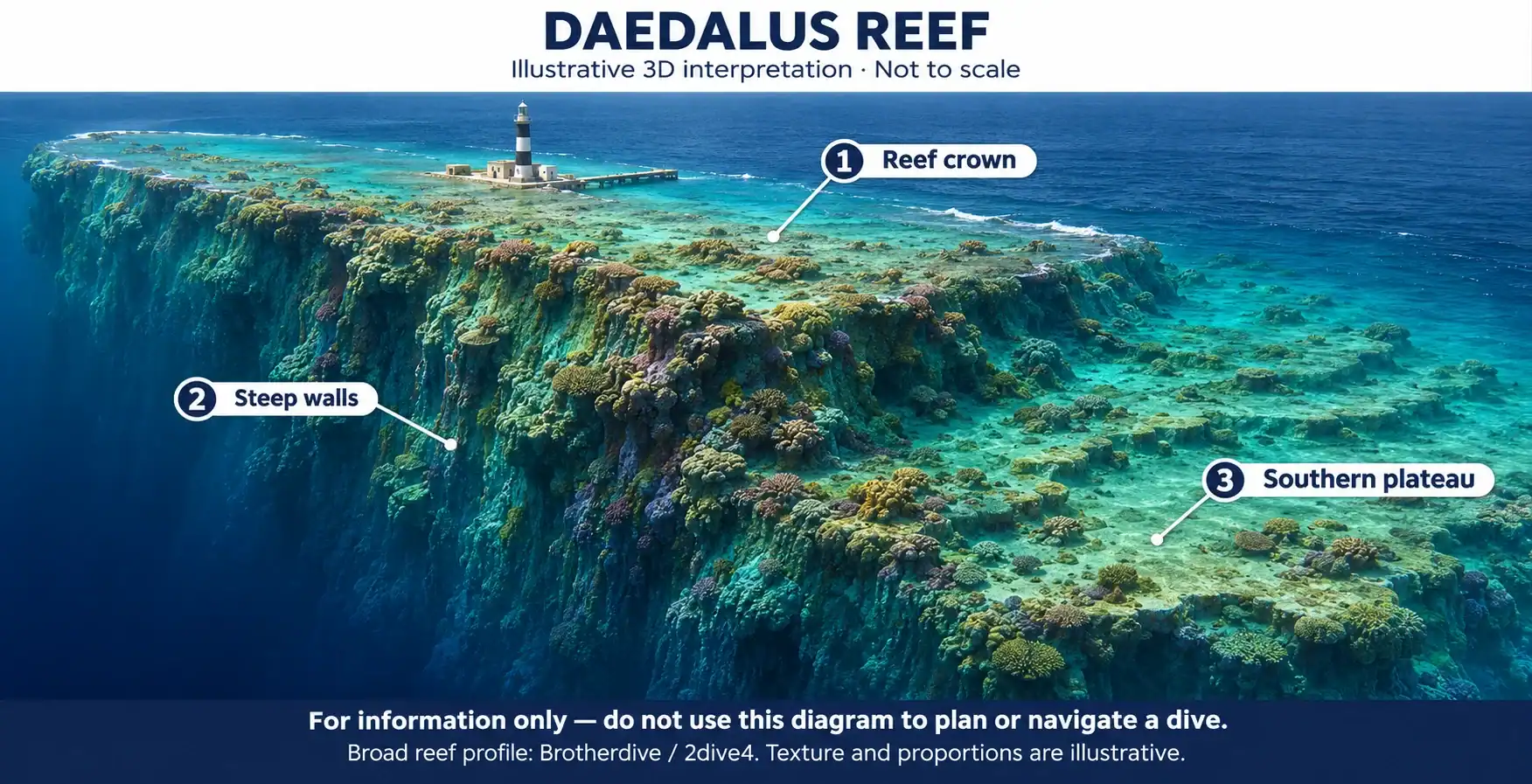
The illustration distinguishes the lighthouse and jetty, reef top, steep outer walls and southern plateau. Reef relief and proportions are simplified.
For information only — do not use this diagram to plan or navigate a dive. It does not replace the licensed operator’s current briefing.
Reference: 2Dive4 Daedalus plans. The source informs the broad features; the artwork is not a measured survey.
Understanding the reef
Daedalus is an elongated offshore reef. Its north end, long east and west walls and southern plateau offer different perspectives, so the guide selects a section to match the conditions rather than trying to cover the whole reef in one dive.
The north end is often associated with hammerhead searches. The side walls reward attention to coral and reef fish, while anemone colonies are another recognised feature of the reef. The southern area offers a plateau before the slope falls into much deeper water.
Operator descriptions place parts of the southern plateau around 30–40 metres. These numbers describe terrain, not the depth every diver should reach. Much of the reef continues far below recreational limits. Agree the maximum depth and route before entering, and do not follow a shark down or away from the group.
Current, experience and the boat operation
Daedalus sits in open sea, and currents can change around the reef. Many visits involve drift diving and RIB entry or collection. The briefing should make the chosen section, group procedure, ascent and pickup clear. A shallow finish near the reef does not make the preceding dive suitable for a beginner.
As a concrete operator example, Emperor requires Advanced Open Water or equivalent and at least 50 logged dives for its Simply the Best route, together with comfort in currents. Check the actual requirements of your chosen departure and provide your recent diving history before paying. A minimum dive count is not a guarantee that every dive will suit you.
The remoteness also matters on board: a long passage in open water is part of the trip. Ask about the expected crossing, cabin arrangements and the alternative itinerary if conditions prevent access. A precise travel time quoted for one departure cannot be applied to every port or vessel.
Marine life and choosing dates
Hammerheads, oceanic whitetips and grey reef sharks are possible encounters; threshers and manta rays are occasional possibilities rather than expected stops on a route. Trevally, tuna and the reef-fish life can be equally memorable.
Seasonal accounts differ, and no calendar can predict a wildlife encounter. Compare the available sailing dates with the operator’s recent local experience and your tolerance for heat and sea conditions. The captain may change the order or omit the reef because of weather even when a brochure lists Daedalus prominently.
Meet the reef
A closer look along the Daedalus walls
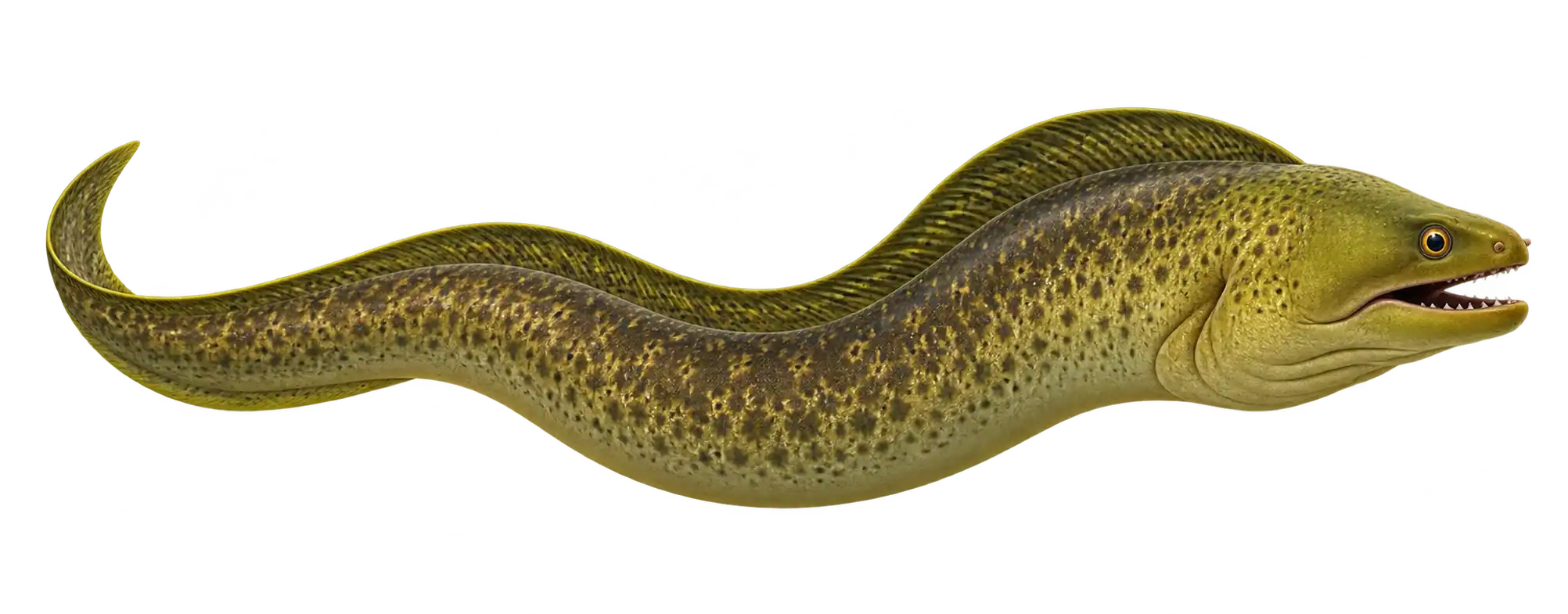
Moray eels
Moray eels shelter among the reef formations on Daedalus’s west wall. Looking into crevices from a respectful distance offers a different focus from watching for sharks in open water.
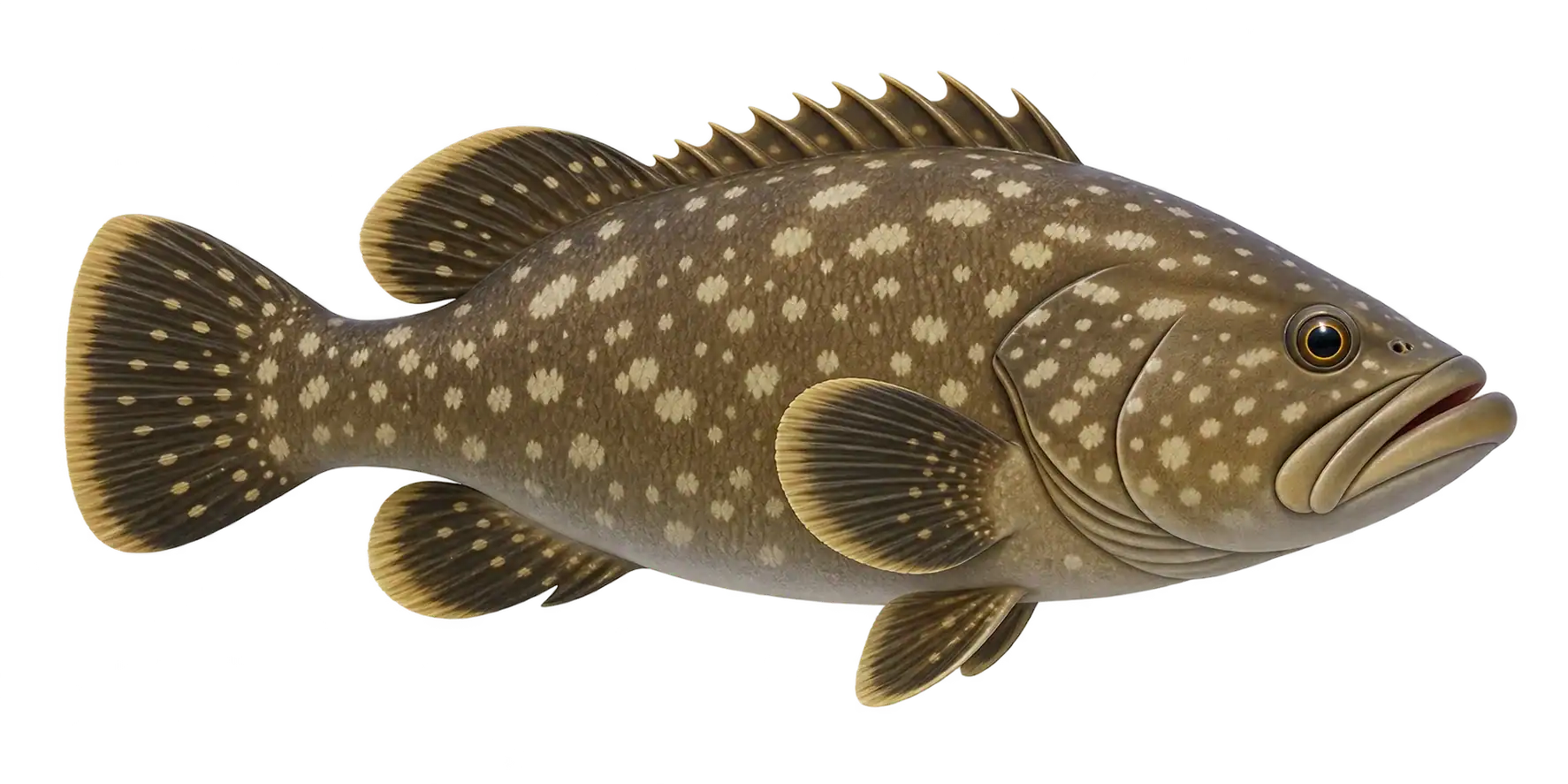
Groupers
Groupers are documented around cleaning stations on the wall. Let the fish settle and keep clear of the reef; watching this smaller-scale activity is part of the appeal between possible pelagic encounters.
Sea anemones and their Red Sea anemonefish are another feature of the west wall. Soft corals and sea fans also contribute to the reef’s character. These animals complement the shark and ray possibilities described above; the illustrated selection is not a complete species checklist.
Source: Blue Shades’ Daedalus site description; checked 4 November 2026. Illustrations are representative, not photographs from the site.
Which liveaboard route?
A Brothers–Daedalus–Elphinstone programme combines three offshore names, but the dives and logistics differ. Read our guides to the Brothers and Elphinstone rather than treating them as interchangeable shark stops.
Another documented choice is Blue Planet’s Daedalus and Fury Shoal route, starting and finishing at Port Ghalib. It combines Daedalus with southern reef diving; the operator states that the exact route depends on weather and guest experience. Confirm the port, transfer, included fees and named itinerary for your particular sailing.
I usually use this website to book my Red Sea liveaboards in advance. I like its easy booking system. Divezone may earn a commission if you book through this link.
Non-divers and companions
A Daedalus itinerary is built around offshore scuba diving. Do not assume passenger acceptance means unrestricted swimming, supervised snorkelling or a lighthouse visit. Confirm what is permitted and actually offered on the sailing, the complete non-diver fare and whether alternative stops suit your companion.
If snorkelling is the main reason for the trip, compare dedicated Fury Shoals or coastal programmes before choosing an offshore route solely for its name.
Underwater video
The existing film, hammerheads at daedalus reef 2, records an earlier encounter. It illustrates a possibility, not a current sighting forecast.
Film and preview: becks in the ocean · hammerheads at daedalus reef 2 on Vimeo.
Where is Daedalus?
The map uses Red Sea Diving’s Daedalus reference at approximately 24.931167° N, 35.870389° E, checked on 26 October 2026. This is a reef-area reference for trip planning, not a mooring, entry point or navigation instruction. Confirm the actual dive location with your operator.
Open a larger area map on OpenStreetMap ↗
Daedalus questions
Can I visit Daedalus on a normal day boat?
Recreational access is by liveaboard because of its isolated offshore position. Confirm Daedalus on the actual sailing itinerary.
How deep are the dives?
You dive a selected section of a reef extending far beyond recreational limits. Some terrain is described at 30–40 metres, but the agreed profile must remain within your qualifications and conditions.
Do I need 50 logged dives?
That is Emperor’s stated minimum for Simply the Best, together with Advanced Open Water or equivalent. Other departures must be checked directly, including recent experience and current comfort.
Are hammerheads or threshers guaranteed?
No. Even a known encounter area can be quiet. Never exceed the agreed profile to pursue an animal.
Is Brothers–Daedalus–Elphinstone the only route?
No. For example, Blue Planet also offers Daedalus and Fury Shoal from Port Ghalib. Exact sites remain weather- and experience-dependent.
Can a non-diver join?
Ask the specific boat about acceptance, price and permitted activities. Do not assume snorkelling or lighthouse visits are included in an offshore diving programme.
Sources
Reef, route and map sources checked 26 October 2026: Emperor reef and requirements; Blue Planet route and departure port; Reef sections, plateau depths and map reference.
Share your visit date, conditions and useful advice for other divers.
You can dive Daedalus Reef all year long. Access: Boat. See the map of Daedalus Reef on the right for the exact location.
Fishes you may spot while diving Daedalus Reef
-
 Clownfish
-
 Grouper
-
 Hammerhead Shark
-
 Manta Ray
-
 Moray Eel
-
 Thresher Shark
-
 Tuna
... and more fishes & sea life, Grey Reef Shark, Jack, Oceanic Whitetip Shark, Silky Shark

Photos
-
 Clown fishes waiting in front of their blue anemone housePhoto by Jihye Lee
-
 Blacktip Shark patrolling the crystal clear water... EPIC photo!Photo by Yann Hubert
-
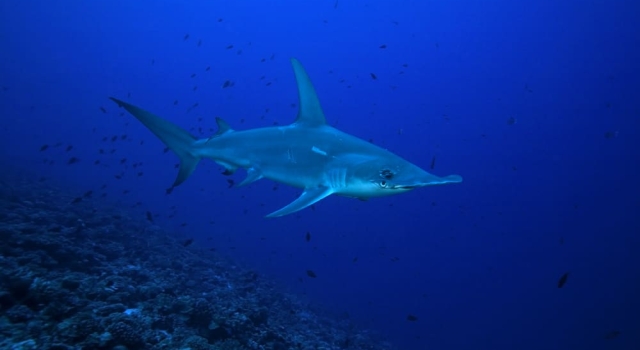 Huge Hammerhead Shark patrolling the reef in French PolynesiaPhoto by Yann Hubert
-
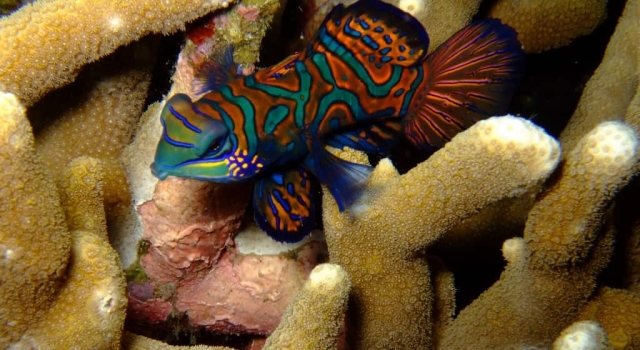 Beautiful & Colorful Mandarin FishPhoto by Rich Guest
-
 Yellow Seahorse in Lembeh StraitPhoto by Agnes Tjandranegara
-
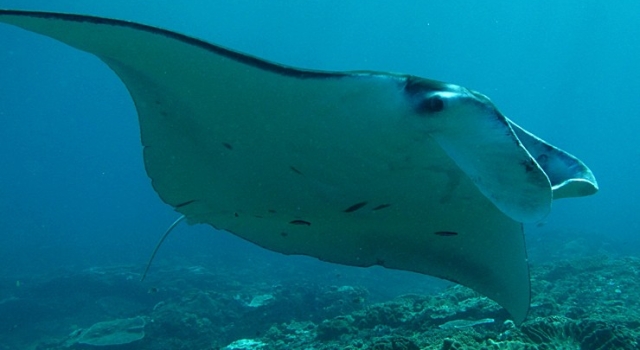 Flying Ray Manta in Bali!Photo by Jihye Lee
-
 Lion Fish swimming in crystal clear waterPhoto by Agnes Tjandranegara
-
 Surreal LifePhoto by Jihye Lee
-
 Moray Eel HidingPhoto by Jihye Lee
-
 Whitetip Moving FastPhoto by Jihye Lee
Diving Reviews for this region

Marsa Alam
Marsa Alam combines shore-access bays such as Abu Dabbab with boat trips to offshore reefs including Elphinstone. Choose the base and dive profile to suit your experience; wildlife sightings vary.
Liveaboard Reviews in Marsa Alam
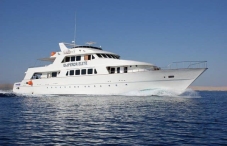
MY Emperor Elite
Emperor Elite offers a broad Red Sea programme, from northern wrecks to the southern reefs and offshore walls. Its thirteen-cabin layout includes conventional twins and two substantially larger suites, making it useful for couples who want a double bed

MV Seawolf Dominator
A shaded dive deck, room to relax outside and a choice of northern and southern programmes make Dominator an appealing base for a week devoted to diving. Choose the route first: a Tiran week and a marine-park week ask different things of a diver.
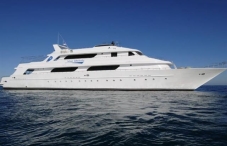
MV Blue Melody
Blue Melody suits divers who enjoy the rhythm of a shared diving holiday: breakfast after the first dive, a long conversation over lunch, then time outside before the next briefing. The outdoor bistro and shaded seating are part of the attraction, with
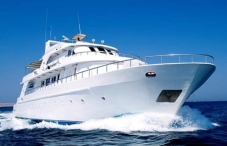
MV Miss Nouran
No dated departure was available online for the earlier MV Miss Nouran when checked on 5 November 2026. This boat is distinct from Glorious Miss Nouran. Its original review described twin cabins, two sun decks and a southern Red Sea programme; the conf
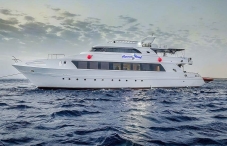
Hammerhead I
Hammerhead I combines a 20-guest capacity with broad dining-room windows and open-air lounging spaces. Her ten en-suite cabins make this 32-metre Egyptian liveaboard worth considering if you prefer a smaller group than on the fleet’s larger Hammerhead
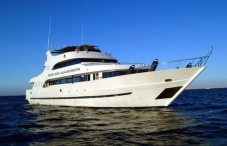
MV Red Sea Aggressor I — Historical Boat Profile
The original Red Sea Aggressor is no longer operating. The vessel was lost following a fire off Port Ghalib on 1 November 2019, in which one passenger died. This page preserves its cabin photographs, life aboard and former Egyptian itineraries. It is n
MV Red Sea Aggressor I — Historical Boat Profile Liveaboard Review
MY Cassiopeia
This is an archive of the older Cassiopeia’s Red Sea operations. LiveAboard.com now lists Cassiopeia under Mexico and identifies its former Socorro Aggressor name. The listing has no online availability when checked on 2 November 2026.
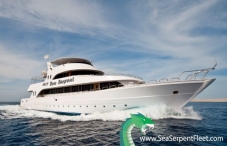
MY Sea Serpent
Sea Serpent is the fleet's 34-metre boat, with eleven cabins for twenty-two divers. It offers a practical choice between lower-deck twins, an upper-deck twin and upper-deck doubles, with a dated programme covering northern wrecks, offshore marine
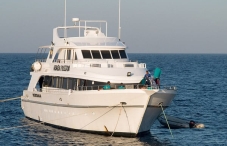
MY Heaven Freedom
No current boat-specific departure has been verified. The specialist Heaven Freedom listing checked on 2 November 2026 describes the boat as unavailable. That does not by itself prove retirement.
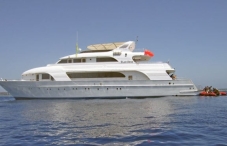
MY Blue Seas
Blue Seas combines a twenty-four-guest layout with northern wreck weeks, offshore marine parks and longer southern expeditions. The two partly shaded sun decks give you a choice of places to relax, while the spacious dive deck keeps the diving routine
Excellent reef ,many sharks.
July 2013 – Beautiful reef plently of life and sharks!!